Chillers & Towers: 4 types of cooling system in injection moulding
- 2026.05.04
- TONY WEN / FLYING TIGER KJ CO., LTD.
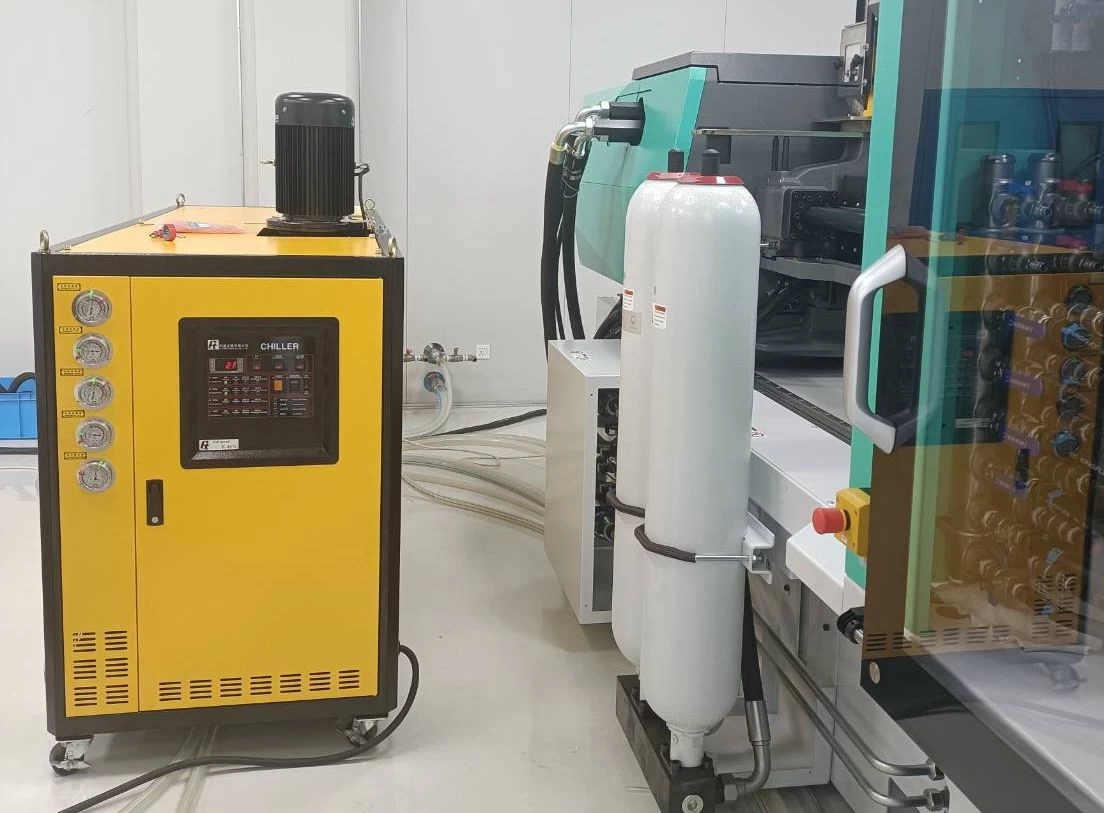
Air-Cooled, Water-Cooled & Cooling Towers Compared — Find the Right Solution for Your Production Line
In industrial processes such as injection molding, extrusion, and blow molding, the cooling system is one of the most critical factors affecting production efficiency and product quality. When cooling is fast and water temperature is stable, production lines can run at full speed with consistent output quality.
Yet industrial cooling equipment comes in many forms, each with different operating principles, suitable applications, and energy consumption profiles. This guide provides a complete overview of the main types of industrial cooling equipment to help you make the most informed decision for your facility.
1. What's the Core Mission of an Industrial Cooling System?
Regardless of the process involved, every cooling system has one fundamental job:
"Efficiently and consistently remove heat generated by the process, keeping equipment and products within their optimal temperature range."
When cooling capacity is insufficient, the consequences typically include:
- Longer cycle times and reduced daily output
- Dimensional inconsistency in finished products, leading to higher defect rates
- Equipment overheating, shortening machine service life
- Increased energy consumption and rising production costs
Selecting the right cooling equipment is one of the most impactful steps toward improving overall manufacturing performance.
2. Main Types of Industrial Cooling Equipment
Air-Cooled Chiller
The air-cooled chiller is the most widely used cooling solution in small-to-medium manufacturing facilities. It dissipates heat from the refrigeration cycle directly into the surrounding air using built-in fans, requiring no external cooling water supply. This makes installation straightforward and highly flexible.
An Air-Cooled Chiller may be right for you if...
- Your facility has no cooling tower or water circuit infrastructure
- You need installation flexibility or the ability to relocate equipment easily
- Your cooling load falls within the small-to-medium capacity range
- The unit can be placed in a well-ventilated area
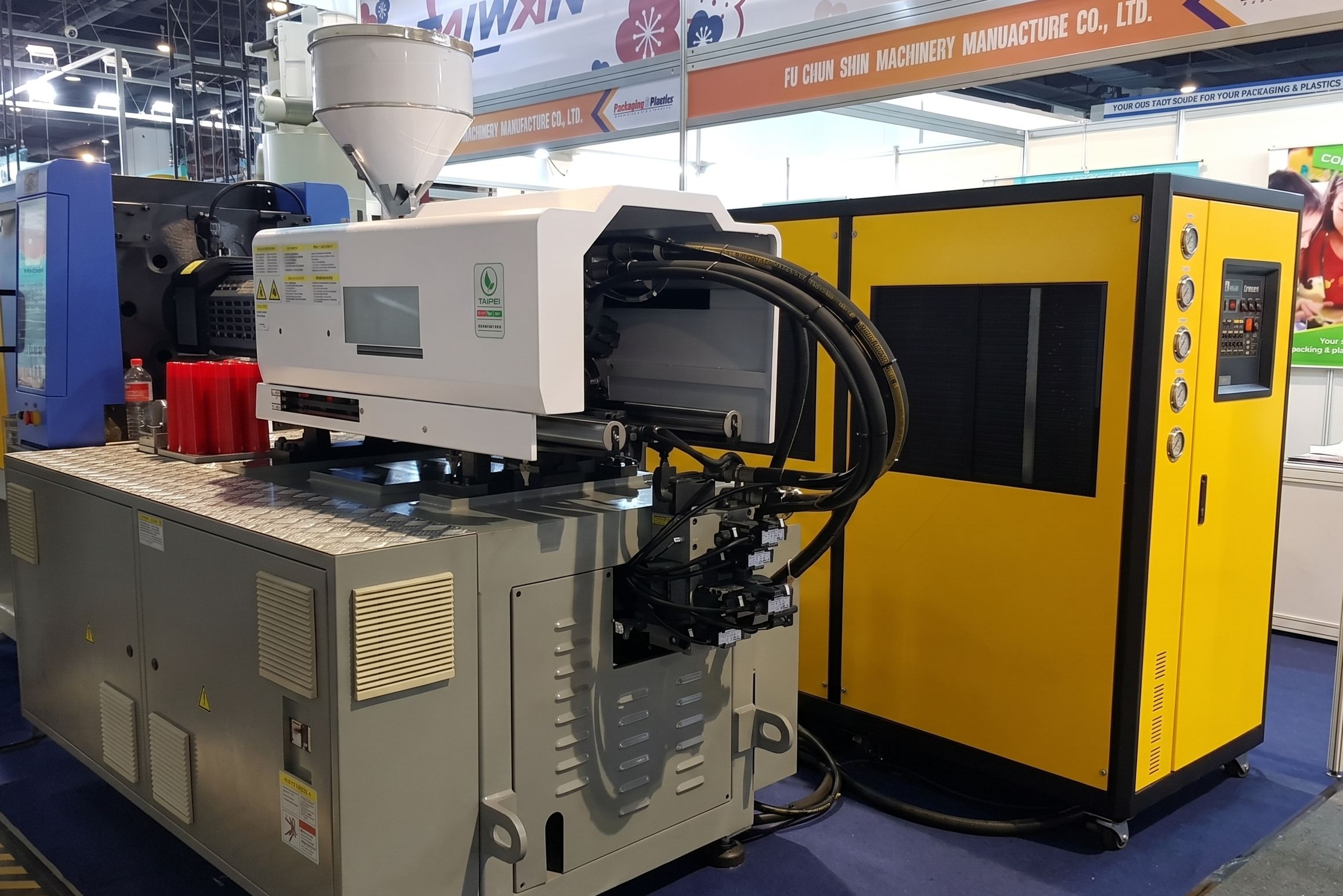
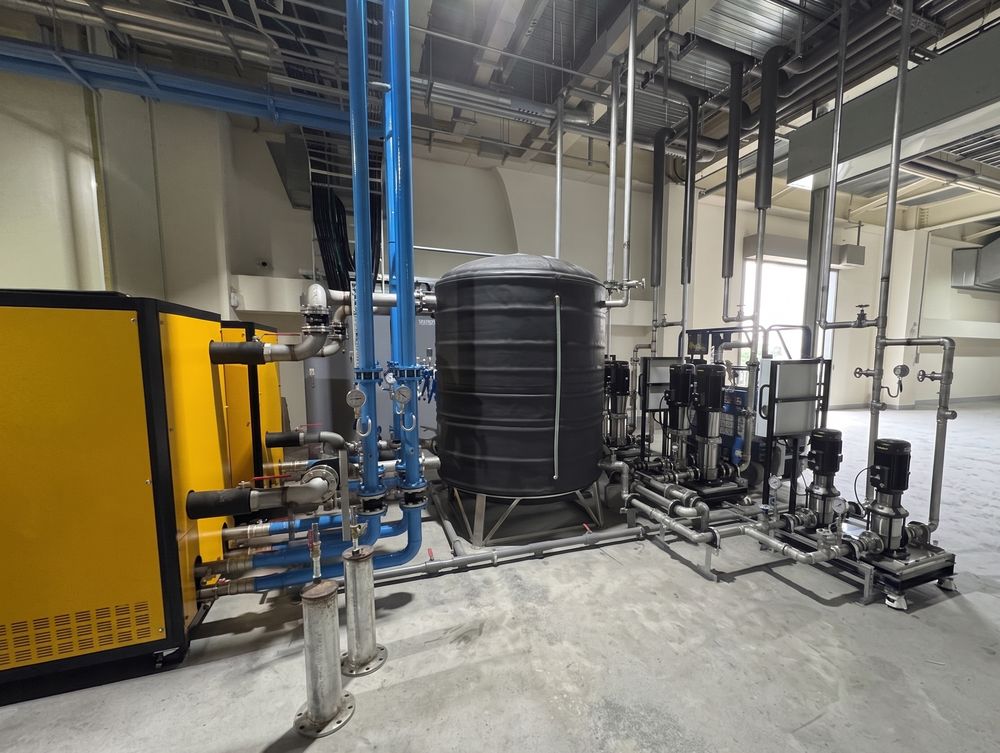
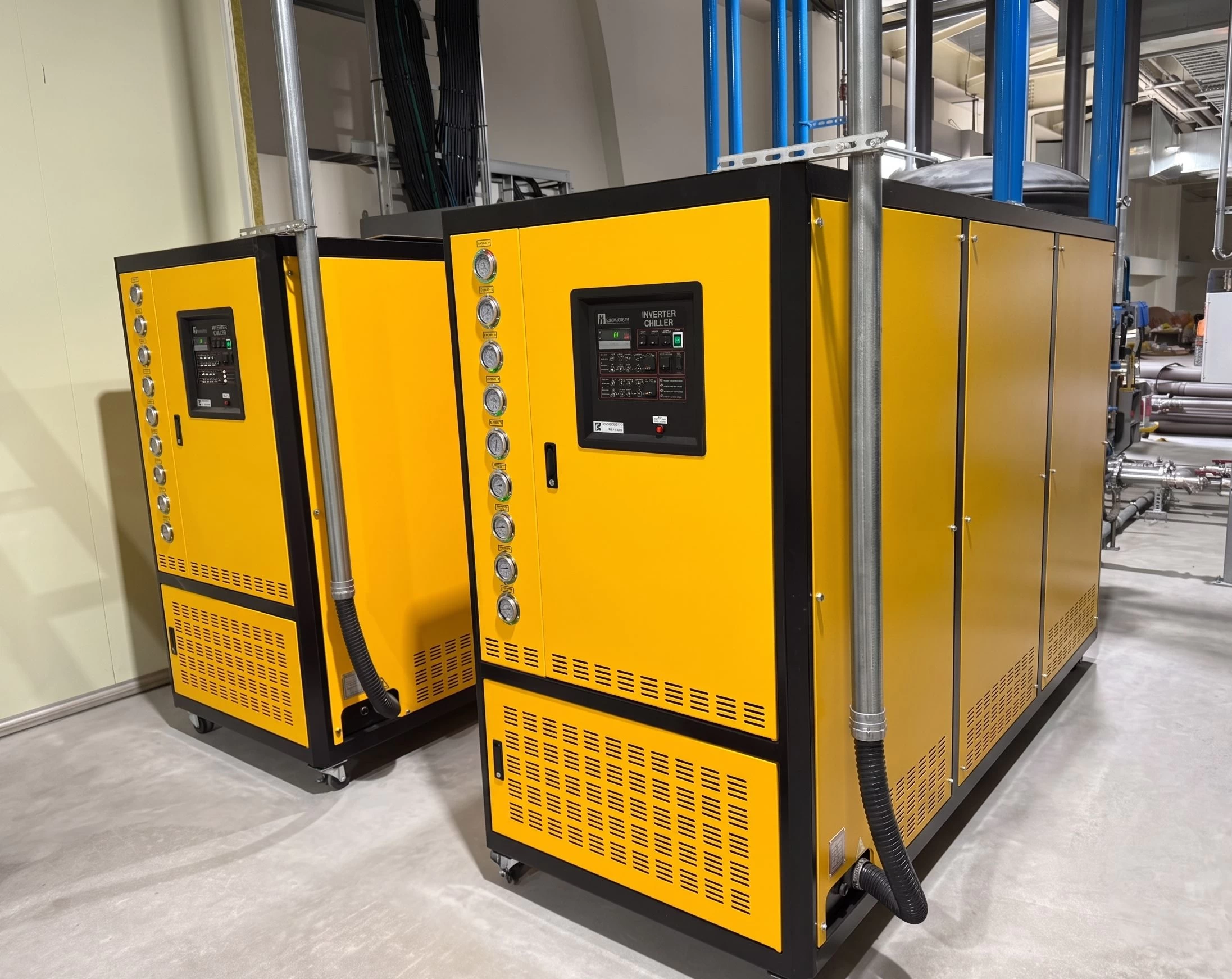
Flying Tiger offers both standard and inverter-driven air-cooled chillers. The inverter type automatically adjusts compressor speed based on real-time cooling demand, achieving energy savings of 30–50% compared to fixed-speed models
Water-Cooled Chiller
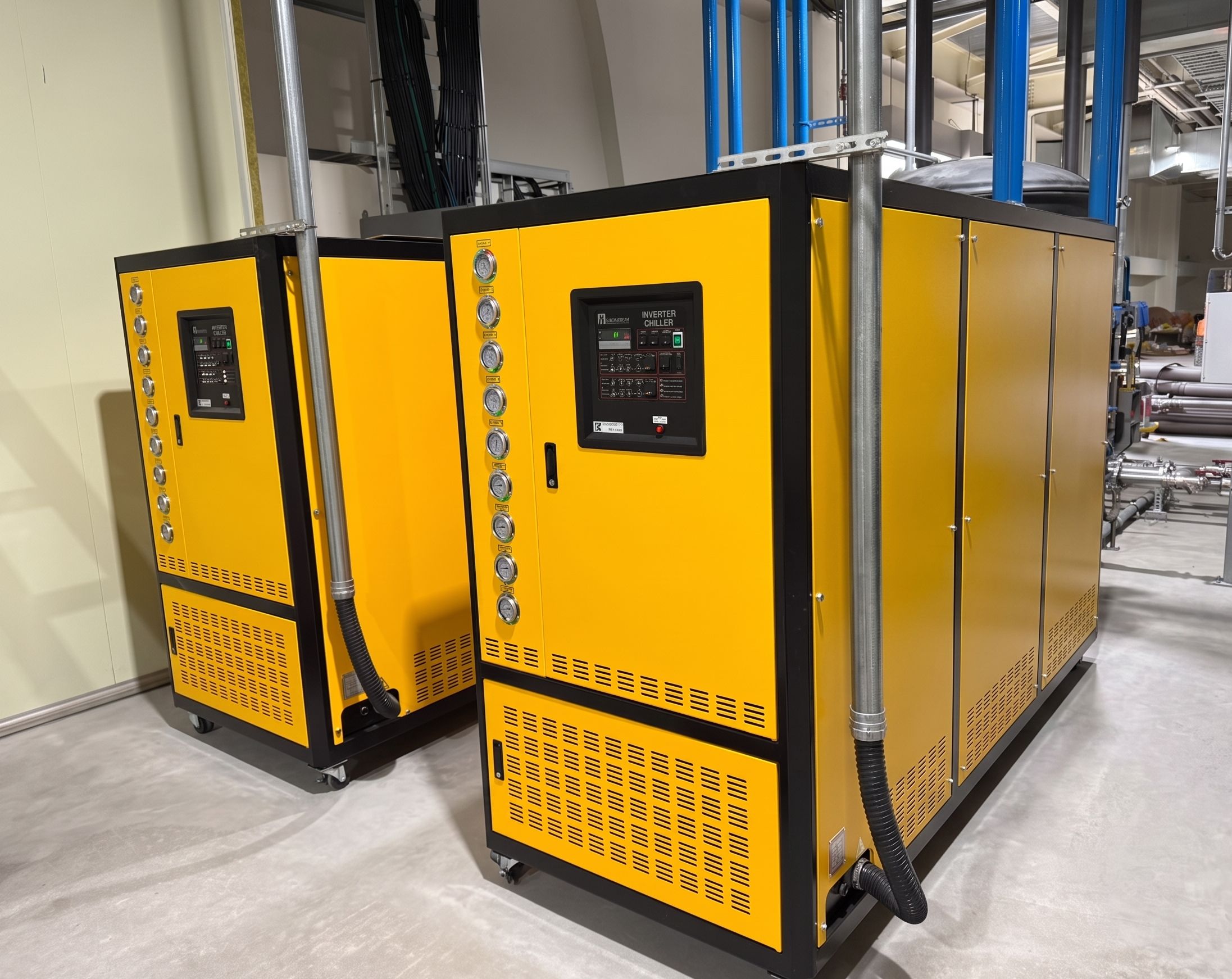
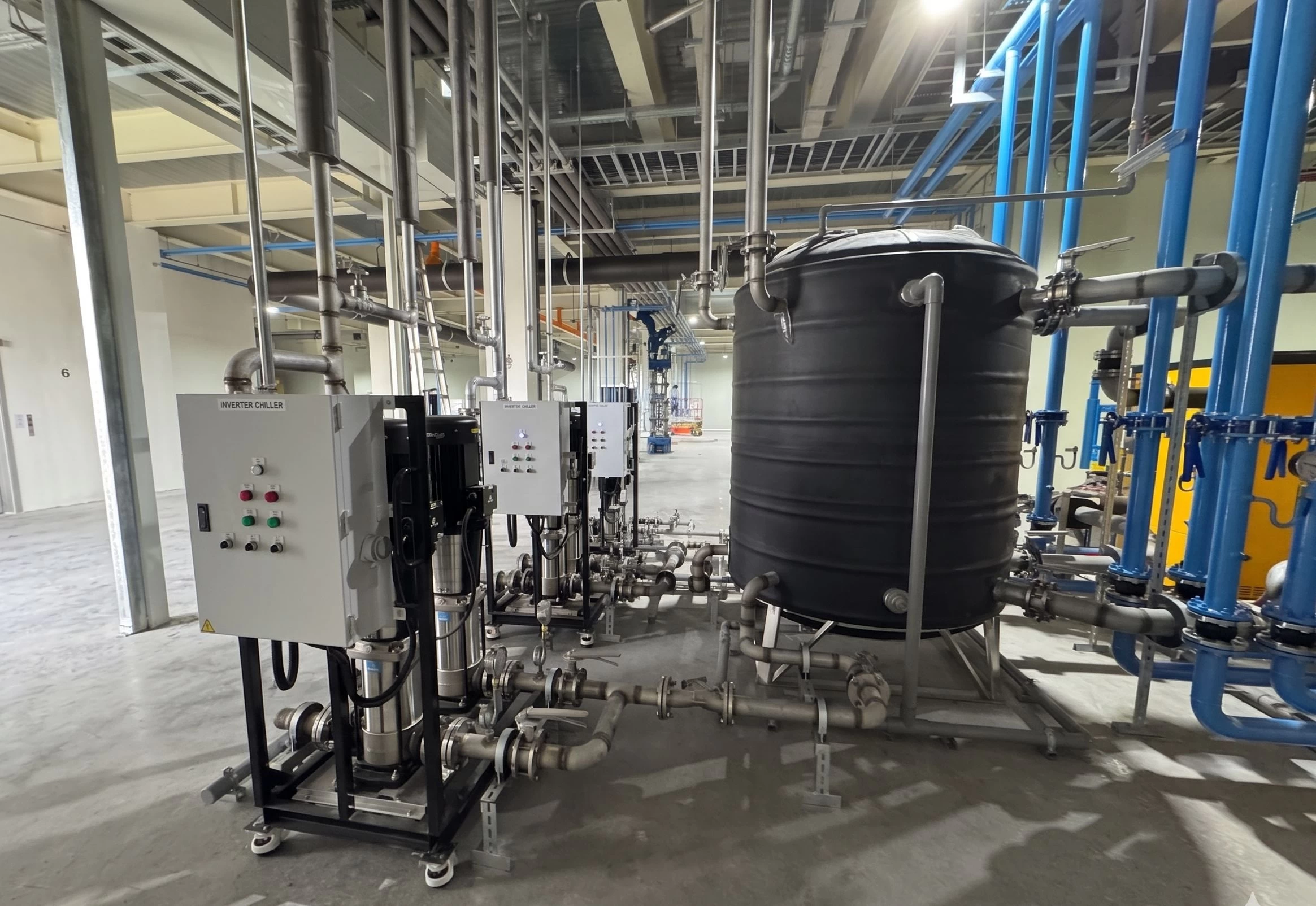
Water-cooled chillers use a cooling water circuit — typically supplied by a cooling tower — to remove heat from the refrigeration system. This approach delivers higher overall cooling efficiency than air-cooled models and is particularly well-suited to high-capacity or continuous-duty applications.
A Water-Cooled Chiller may be right for you if...
- Your facility already has a cooling tower or water piping infrastructure
- Your production line has large or continuous cooling demands
- You are targeting lower operating energy costs and longer equipment lifespan
- The chiller unit will be installed indoors, away from open-air heat dissipation
Flying Tiger's inverter water-cooled chillers automatically reduce power consumption during partial-load operation — particularly beneficial for factories where cooling demand varies significantly by season or shift schedule.
Cooling Tower (Open Type)
A cooling tower is not a refrigeration device. Instead, it lowers water temperature through evaporative cooling — releasing heat into the atmosphere as water evaporates — before recirculating the cooled water back to the process. Cooling towers are commonly paired with water-cooled chillers to handle heat rejection on the condenser side, though some facilities use them independently to provide ambient-temperature cooling water.
Cooling Towers are used in two main ways:
- Paired with a Water-Cooled Chiller: The cooling tower rejects heat from the chiller's condenser — an essential component of a complete water-cooled system
- Standalone Process Cooling Water Supply: Provides ambient-temperature water directly to production equipment, suitable for processes with lower temperature precision requirements.
Closed-Type Stainless Steel Cooling Tower (SUS Close-Type)
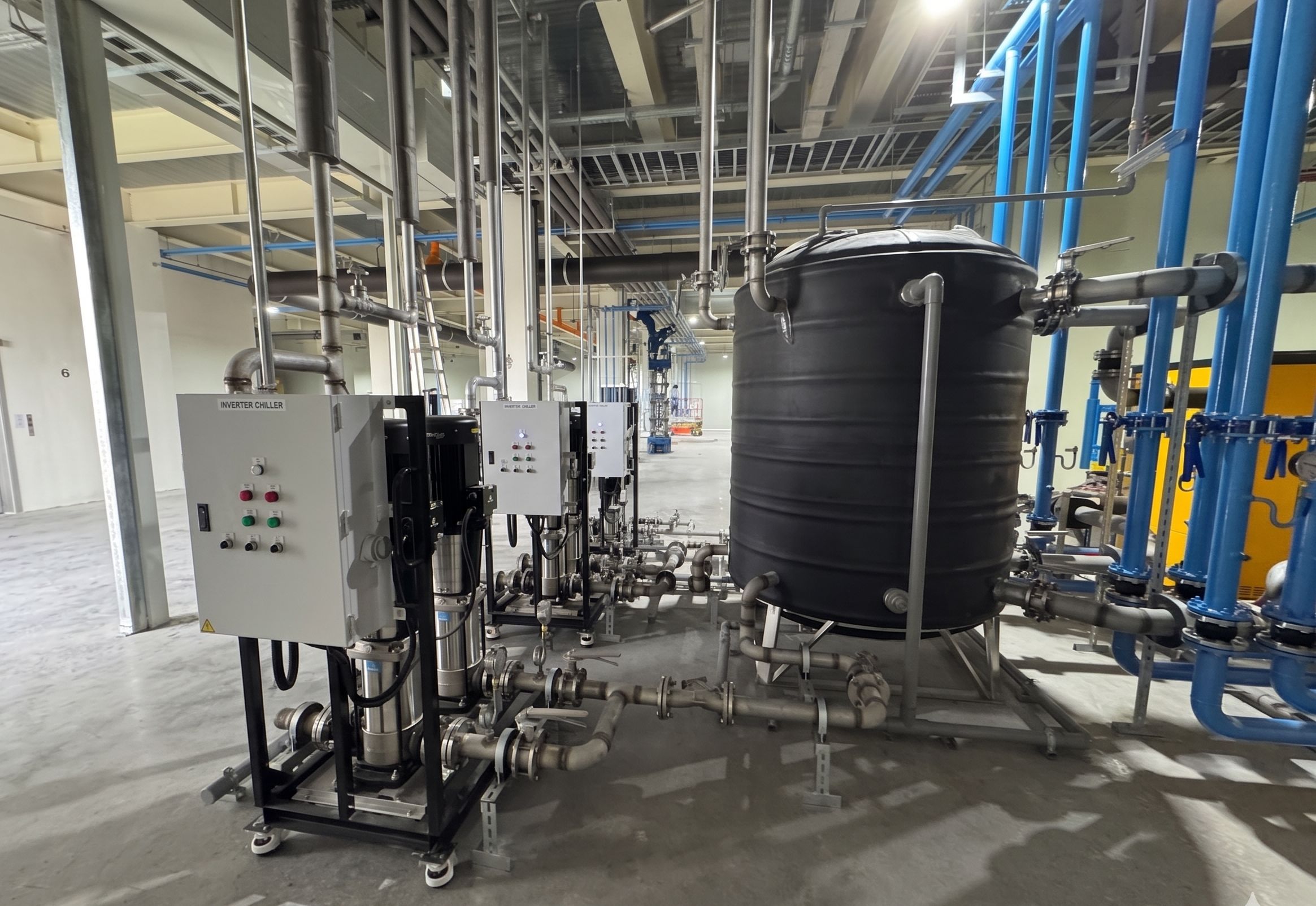
Unlike open cooling towers, the closed-type (or dry cooler) design keeps process water completely isolated from the outside air. Heat is transferred indirectly through a coil, so the cooling water never contacts the atmosphere
Key advantages of the closed-type design:
Flying Tiger's SUS Close-Type Cooling Tower uses stainless steel construction for enhanced corrosion resistance and durability in demanding industrial environments.
3. Quick Comparison: Which Equipment Fits Your Needs?
| Equipment Type | Key Advantage | Best Suited For |
|---|---|---|
| Air-Cooled Chiller | No water supply needed; flexible installation | Small–medium lines, standalone machines |
| Water-Cooled Chiller | High efficiency; lower energy cost at scale | Large lines, continuous high-load production |
| Open Cooling Tower | Cost-effective heat rejection or ambient cooling | Paired with water-cooled chiller, or low-precision cooling |
| SUS Closed-Type Tower | Clean water circuit; low maintenance | Processes requiring high water quality |
4. Why Are Inverter Chillers Increasingly the Smart Choice?
Conventional fixed-speed chillers are designed to operate at full capacity — even when actual cooling demand is well below the maximum. In real-world production environments, cooling loads fluctuate constantly based on product type, shift schedules, and seasonal temperatures. Running a fixed-speed compressor at full power regardless of load results in significant energy waste.
Inverter chillers solve this problem by dynamically matching compressor speed to actual demand:
- Lower speed during reduced-load periods — directly cutting electricity consumption
- Smoother startup reduces mechanical stress, extending compressor service life
- More precise and stable chilled water temperature, reducing process variability
Flying Tiger's inverter air-cooled and water-cooled chillers deliver 30–50% energy savings in typical operating conditions. For facilities running continuous shifts, the return on investment from energy cost reduction alone is often realized within a short timeframe.
5. How to Choose the Right Cooling Equipment?
When evaluating industrial cooling solutions, we recommend working through the following questions:
- Determine your process heat load (kcal/hr or RT) — this defines the minimum capacity your cooling system must handle.
- Assess your existing infrastructure — if a cooling tower and water piping are already in place, a water-cooled chiller is the natural fit; if not, an air-cooled chiller offers the fastest path to deployment.
- Consider your duty cycle and load variability — for long-duration, high-load operation, water-cooled systems offer better efficiency; for fluctuating loads, inverter models deliver the best energy performance
- Evaluate water quality requirements — if your process is sensitive to water cleanliness or contamination, a closed-type cooling tower eliminates the risk of airborne particulates entering the cooling circuit.
- Factor in energy cost targets — if electricity is a major operating expense, the long-term savings from an inverter chiller should be weighed against the initial investment.
If you're unsure where to start, Flying Tiger's engineering team is ready to help. We'll analyze your process requirements and recommend the most suitable equipment configuration.
Not Sure Which Cooling Solution Is Right for You?
Check out Flying Tiger's industrial water/air chillers models or Contact Us directly for a free assessment and quote!
Email: service@tigerkj.com
Phone: +886-985643156


Back