Extrusion
What Is Plastic Extrusion?
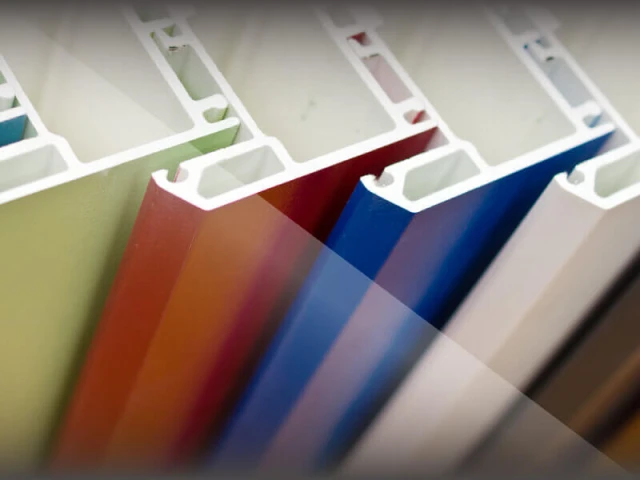
Plastic extrusion is a continuous manufacturing process where molten plastic is forced through a shaped die to produce long, uniform products such as pipes, tubing, sheets, films, profiles, and pellets. It is one of the most energy-intensive segments of plastics processing, and the performance of auxiliary equipment directly determines product dimensional stability, surface quality, and overall operating cost.
Common extruded materials include PET, PE, PP, PVC, PC, PS, and a wide range of engineering resins, each with distinct processing requirements for temperature, moisture, and throughput.
Key Challenges in Extrusion Processing
- ● Temperature stability
Fluctuations in melt temperature or cooling water supply cause dimensional variation, surface defects,
and inconsistent mechanical properties in extruded pipes, sheets, and profiles. - ● Material pre-drying
Hygroscopic resins such as PET, PA, PC, and PETG require thorough pre-drying before entering the extruder.
Residual moisture triggers hydrolytic degradation, foaming, streaks, and intrinsic viscosity loss. - ● Energy consumption
Continuous 24/7 operation means that the energy efficiency of chillers and dryers has an outsized impact on
operating costs and carbon footprint. - ● Blending accuracy
Consistent dosing of colorants, UV stabilizers, flame retardants, and regrind into the extruder feed
directly affects product performance and regulatory compliance.
Flying Tiger KJ’s Extrusion Auxiliary Solutions
Flying Tiger KJ provides a full range of energy-efficient auxiliary systems designed for continuous extrusion production lines. Our solutions address pre-drying, temperature control, conveying, and dosing — the four pillars of extrusion line performance.
Temperature Control and Cooling
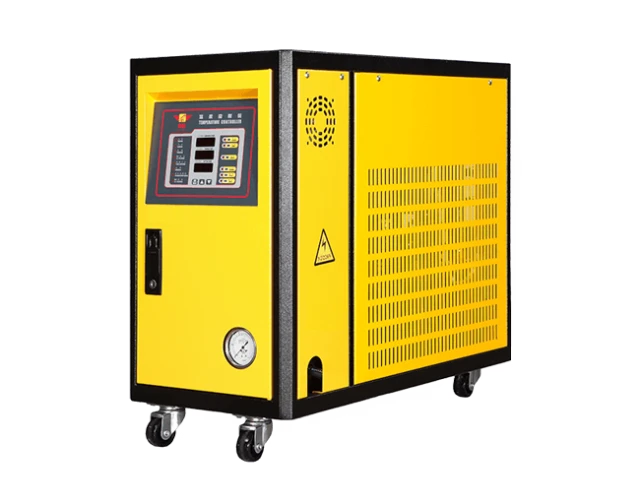
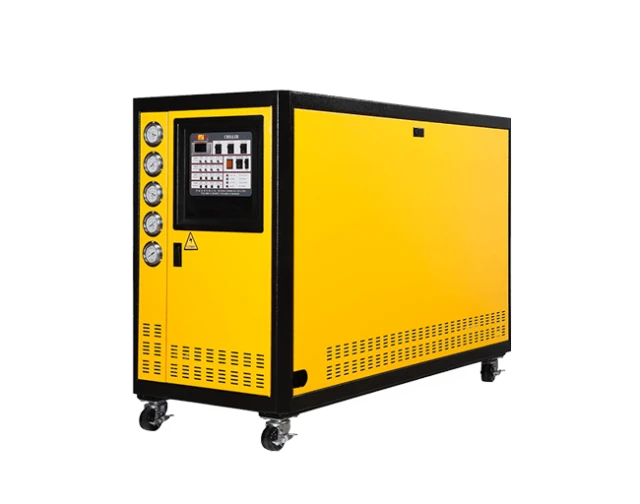
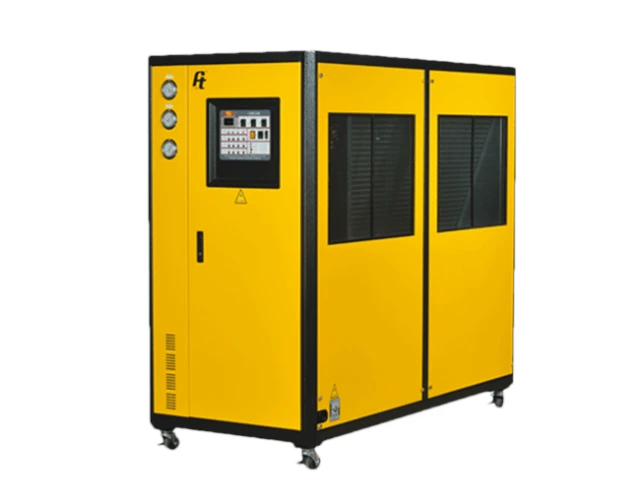
The Inverter Water and Air Cooling Chillers regulate cooling water temperature using variable-frequency drive (VFD) compressors, delivering up to 50% energy savings.
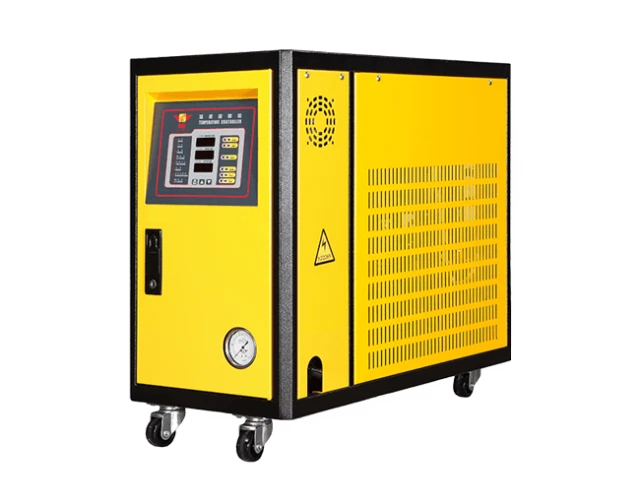
The Water Temperature Controller and Oil Temperature Controller provide stable thermal regulation for barrel zones and die temperatures, essential for maintaining melt viscosity and dimensional consistency.
Rapid Vacuum Drying for PC and PET
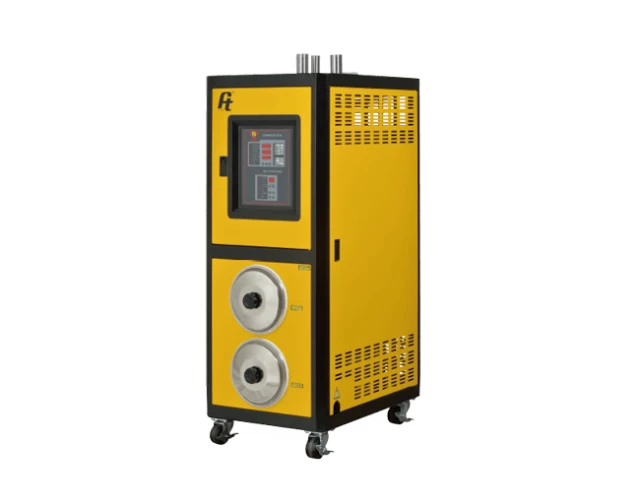
For PC and PET extrusion applications — where material quality is most sensitive to moisture — our proprietary Vacuum Dehumidifying Dryer offers a standout solution. A vacuum environment below 1 Torr drops water’s evaporation point to below room temperature, achieving thorough drying in just 1–2 hours — over 50% faster than conventional adsorption systems — while reducing electricity consumption by more than 30%.
Continuous PET Crystallizing and Drying
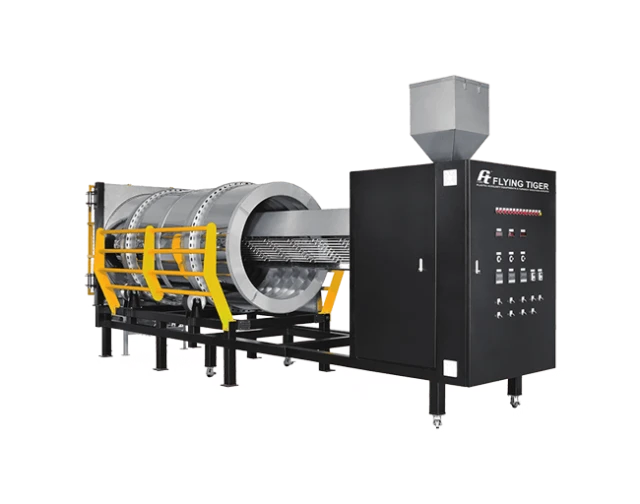
For PET-specific applications requiring simultaneous crystallization, the Infrared Rotary Dryer — a patented Flying Tiger KJ innovation — uses far-infrared radiation to process PET pellets in a single continuous operation, preserving intrinsic viscosity (IV value) for food-grade sheet, optical film, and fiber end uses.
Moisture content below 50ppm is consistently achieved across both drying technologies. For other demanding engineering resins, the Honeycomb Dehumidifying Dryer provides dew points as low as −40°C.
Accurate Additive Dosing
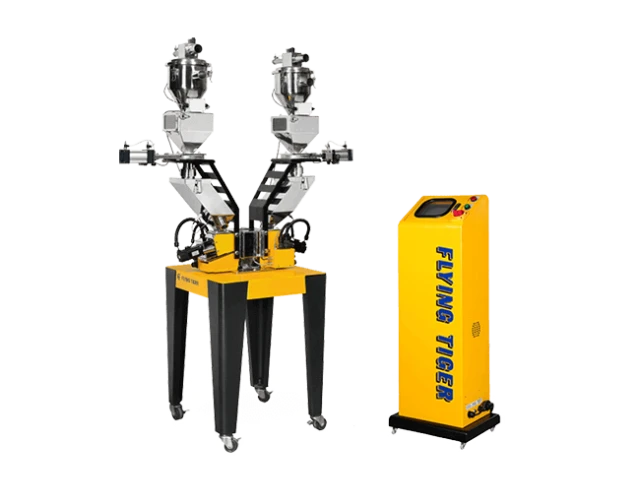
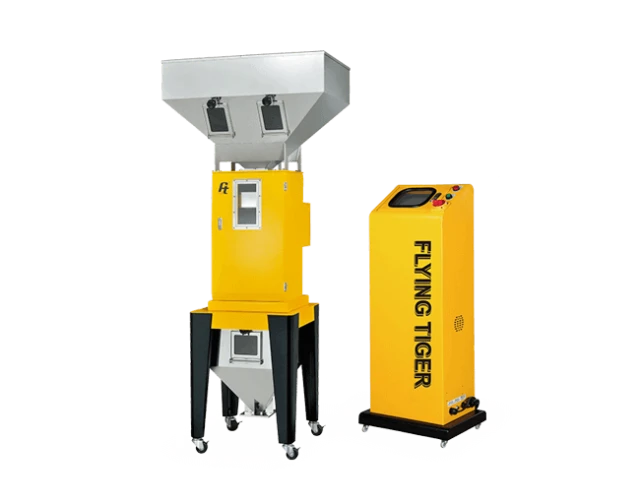
The Gravimetric Dosing Blender and Loss-In-Weight Dosing Blender ensure accurate, continuous proportioning of additives and masterbatches into the extruder feed.
Automated Material Conveying
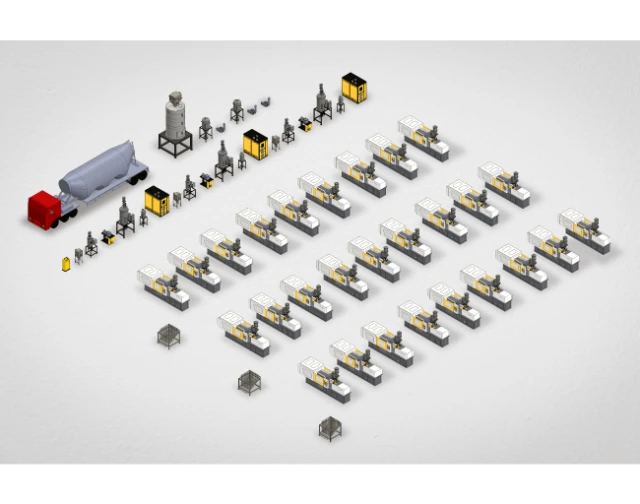
A Central Material Conveying System completes the setup by reliably delivering pellets from storage silos to hoppers — supporting full Industry 4.0 integration.
Contact Flying Tiger KJ today for a customized extrusion auxiliary package tailored to your production requirements.