Warpage in Plastic Injection Molding: Causes & Proven Solutions
- 2026.06.16
- TONY WEN / FLYING TIGER KJ CO., LTD.
Warpage can turn a molded part from usable to rejected. When a part bends, twists, or loses its intended shape, it may affect assembly, dimensional accuracy, and final product quality. That is why understanding warpage in plastic injection molding issues is important for manufacturers that want more stable production and lower scrap rates.
This article explains the main causes, practical solutions, and how reliable auxiliary systems can help improve molding consistency.
1. The Hidden Causes of Warpage in Plastic Injection Molding
Warpage rarely comes down to a single bad setting. More often, it builds up from small process imbalances, such as uneven cooling, weak packing, material issues, or part geometry that creates internal stress.
To fix it, manufacturers need to look beyond the press and evaluate the entire molding process. Here are the main areas to check first:
Product & Mold Geometry Issues
Part and mold geometry are often where warpage starts. The most common issues include
- Improper Gating Strategy: Poor gate placement can cause uneven filling and packing, leaving some areas over-packed and others under-packed. This imbalance can create internal stress as the part cools
- Unbalanced Ejection Forces: If the part is pushed out with uneven force, it can bend or distort before it has fully stabilized, especially in thin sections or delicate features.
- Structural Design Flaws: Uneven wall thickness, sharp transitions, or weak support features can lead to uneven shrinkage and increase the risk of warpage.
Material Shrinkage & Moisture Sensitivity
Warpage risk changes with the way a material shrinks during cooling. In general, materials fall into three common behavior patterns:
| Material Type | Warpage Risk | Key Consideration |
|---|---|---|
| Amorphous | Lower to moderate | Shrinkage is usually more predictable, which makes dimensional control easier. |
| Semi-crystalline | Higher | Shrinkage can be greater as crystalline regions form during cooling, especially if cooling is uneven. |
| Fiber-reinforced | Directional risk | Fiber orientation can create different shrinkage rates with and against the flow direction, increasing the chance of warpage. |
Moisture sensitivity also needs to be managed carefully. Materials such as PET, PA, and PC should be thoroughly dried before molding. If residual moisture remains, it can turn into vapor under high heat, affecting flow behavior, surface finish, and dimensional stability.
Management & Quality Control Oversights
Warpage is not always caused by mold design or machine settings. In many cases, it comes from gaps in process control, inspection, or equipment maintenance:
- Inadequate Real-Time Monitoring: Small changes in temperature, pressure, cooling time, or material condition can go unnoticed without real-time monitoring. By the time the defect is visible, the process may have already drifted out of control.
- Premature Part Handling: Parts can continue to move or deform after ejection if they’ve not fully stabilized. Removing, stacking, or assembling them too early may increase the risk of post-molding distortion.
- Neglecting Auxiliary Equipment Calibration: Dryers, chillers, mold temperature controllers, and conveying systems all affect process consistency. If these systems are not calibrated or maintained properly, they can quietly contribute to warpage.
Fluctuating Processing Parameters
Even with a good mold design, unstable process settings can still create warpage. Key factors include:
- Inconsistent Melt Preparation: Melt temperature and residence time affect flow, packing, and shrinkage. If either one is unstable, shrinkage can vary from shot to shot and increase the risk of warpage.
- Insufficient Packing Pressure and Duration: Without enough packing pressure or hold time, the part may not receive enough material compensation during shrinkage. This can leave internal stress in the part and increase the risk of distortion.
- Erratic Cooling Dynamics and Cycle Times: DUneven cooling or inconsistent cycle timing can create temperature differences across the part. These differences often lead to internal stress, uneven shrinkage, and warpage.
2. How to Reduce Warpage in Injection Molding?
Reducing warpage is about controlling the conditions that cause uneven shrinkage. That means tightening up part design, material preparation, mold temperature, and process visibility before defects show up on the production floor.
Optimizing Part Design & Gating Strategies
Consistent wall thickness, smooth transitions, and proper support features help the part cool and shrink more evenly. The right gate size and location help the material fill the cavity more evenly and maintain better packing, reducing stress differences across the part.
Flawless Material Preparation at the Source
Warpage control starts before the material enters the barrel. Moisture-sensitive materials should be dried according to supplier recommendations, and handling conditions should remain stable throughout production.
Mastering Thermal Equilibrium with Advanced Equipment
Mold temperature has a direct impact on how evenly a part cools. If one area releases heat faster than another, the part can shrink unevenly and warp after ejection.
Advanced chillers and mold temperature controllers help keep mold temperature stable across the process. Better thermal control supports more consistent cooling, lower scrap rates, and a more repeatable molding cycle.
Automating Material Handling & Smart Monitoring
Automation helps reduce the small variations that often lead to warpage. Central conveying, automated material handling, and smart monitoring can keep material supply, drying conditions, and process data more consistent.
3. Other Common Injection Molding Defects
Warpage is only one sign that the molding process needs a closer look. When flow, packing, cooling, or mold conditions are unstable, other defects can show up as well. Here are a few issues manufacturers commonly run into:
- Sink Marks: Sink marks are shallow dents that usually appear near thick sections, ribs, or bosses. They often point to uneven cooling or not enough packing to compensate for shrinkage.
- Weld Lines / Knit Lines: Weld lines, or knit lines, appear where two flow fronts meet in the mold. Besides affecting appearance, they can also create weaker areas if the material does not bond well at the meeting point.
- Flow Lines: Flow lines show up as streaks, waves, or visible patterns on the part surface. They are often tied to uneven material flow, poor gate placement, low melt temperature, or unstable cooling.
- Short Shots (Non-fills): Short shots (non-fills) occur when the melt cannot fully reach every area of the cavity before it starts to cool. This can leave the part with missing features, thin edges, or incomplete details.
In many cases, the issue comes from low injection pressure, poor venting, flow restrictions, or a melt temperature that is not high enough for the material and part geometry.
4.Integrating Simulation with Reliable Auxiliary Systems
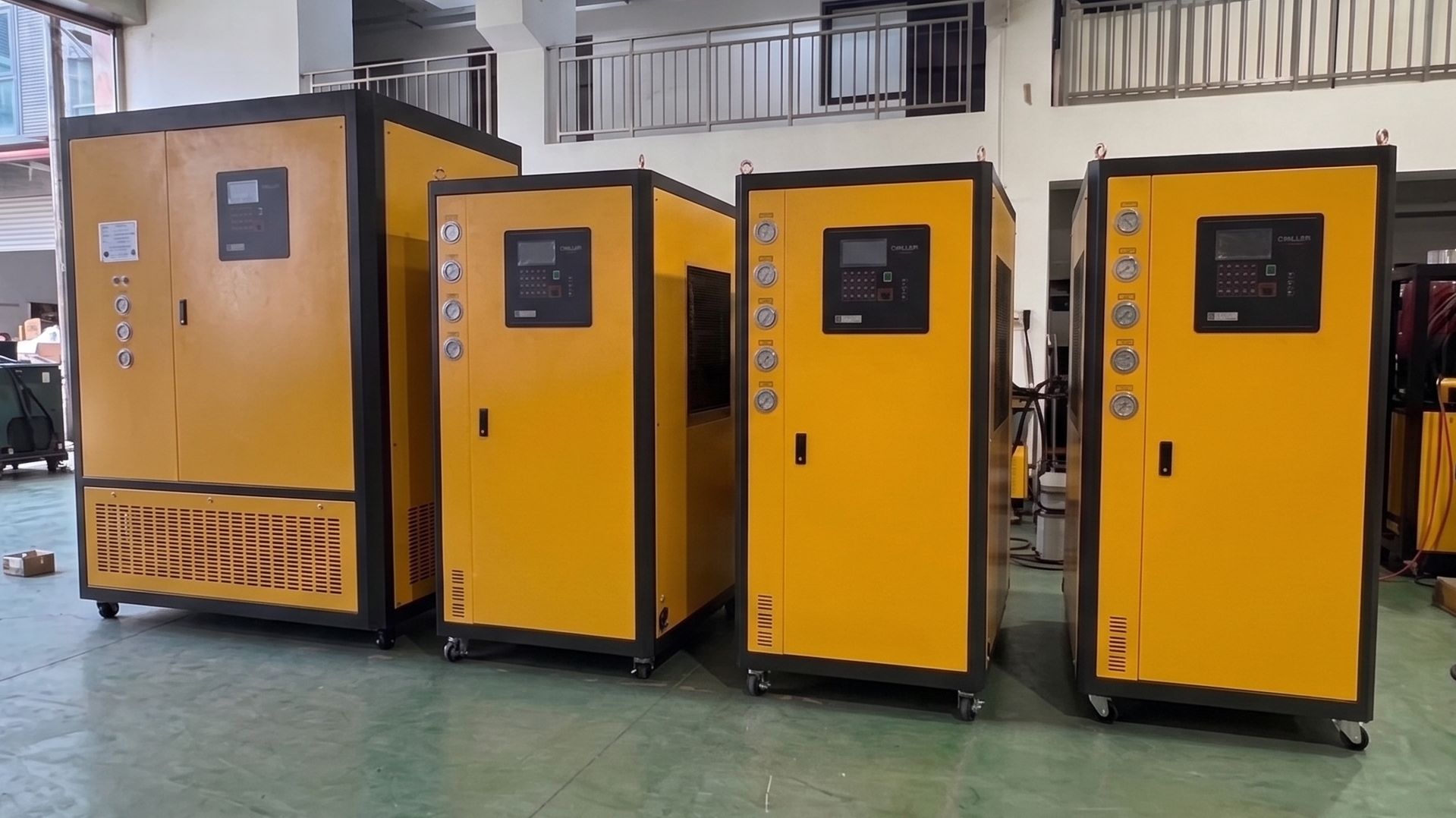
Perfect warp-free production does not come from design optimization alone. Simulation can reduce risk early, but consistent results depend on reliable auxiliary equipment that keeps temperature, drying, cooling, and material conveying stable throughout production. This is where Flying Tiger KJ’s superior system integration capabilities stand out.
Instead of relying on separate, single-chiller units, Flying Tiger KJ can upgrade the cooling setup into a high-efficiency central chilled water system, creating a more stable and easier-to-manage cooling environment for injection molding and related plastics processing./p>
By integrating equipment such as cooling towers, inverter water-cooled chillers, mold temperature controllers, and chilled water systems, Flying Tiger KJ helps manufacturers improve temperature stability across the production line. /p>
Its inverter chiller design can also reduce energy consumption by 30% to 50% compared with traditional fixed-frequency models, supporting both better process consistency and lower operating costs./p>
Ready to eliminate cooling bottlenecks and stabilize your production? Contact us today to see how our cooling solution can help you achieve warp-free, consistent results./p>
FAQs
If you're unsure where to start, Flying Tiger's engineering team is ready to help. We'll analyze your process requirements and recommend the most suitable equipment configuration.
Check out Flying Tiger's Solution: ➜ [ industrial water/air chillers models] or Contact Us directly for a free assessment and quote!


Back