How Infrared Rotary Dryers Achieve Food-Grade rPET in Under 15 Minutes
- 2026.05.08
- TONY WEN / FLYING TIGER KJ CO., LTD.
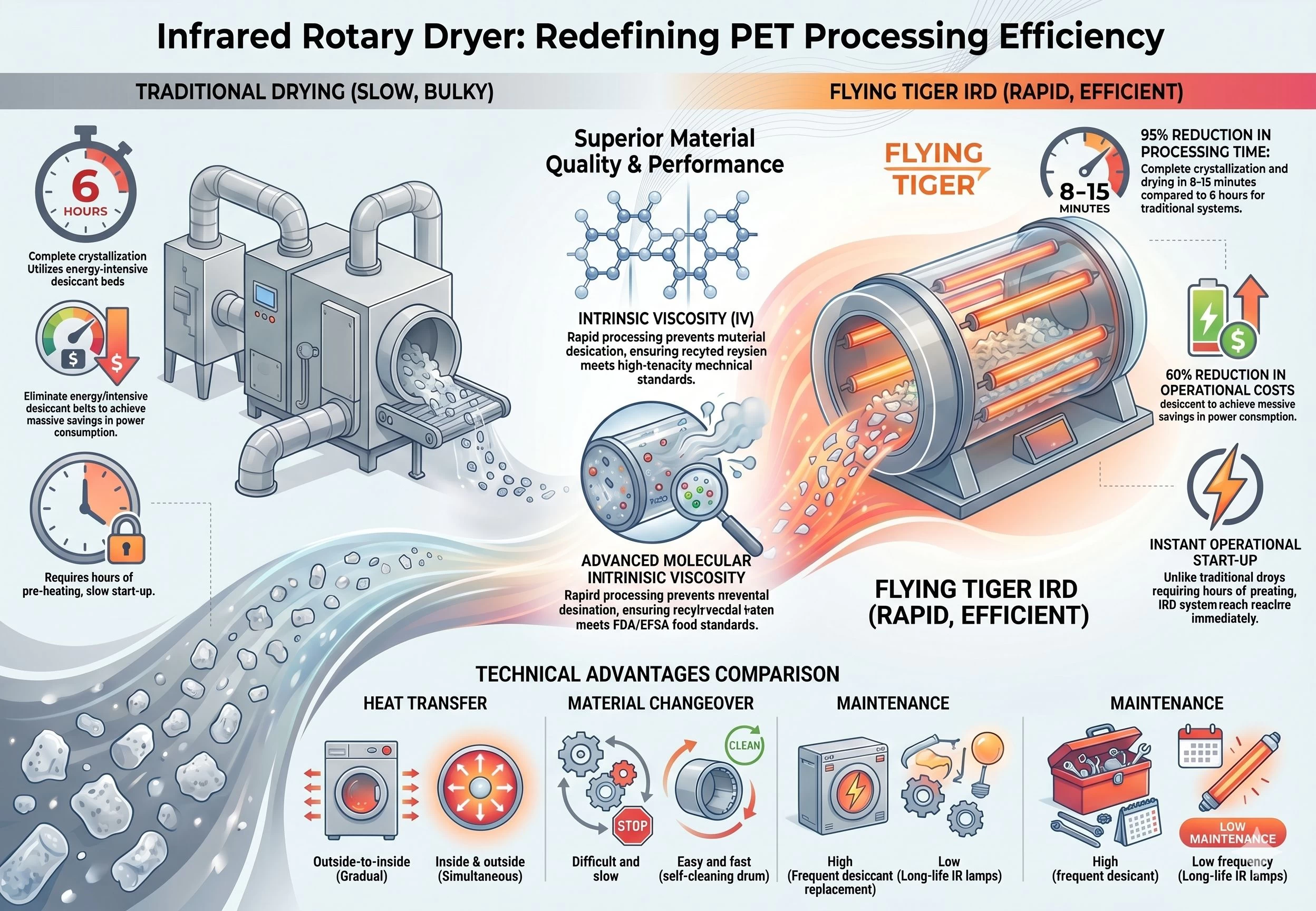
In rPET regeneration, time and oxygen are the enemies of material integrity. The longer plastic flakes are exposed to high heat in a traditional hopper, the higher the risk of thermal degradation and yellowing.
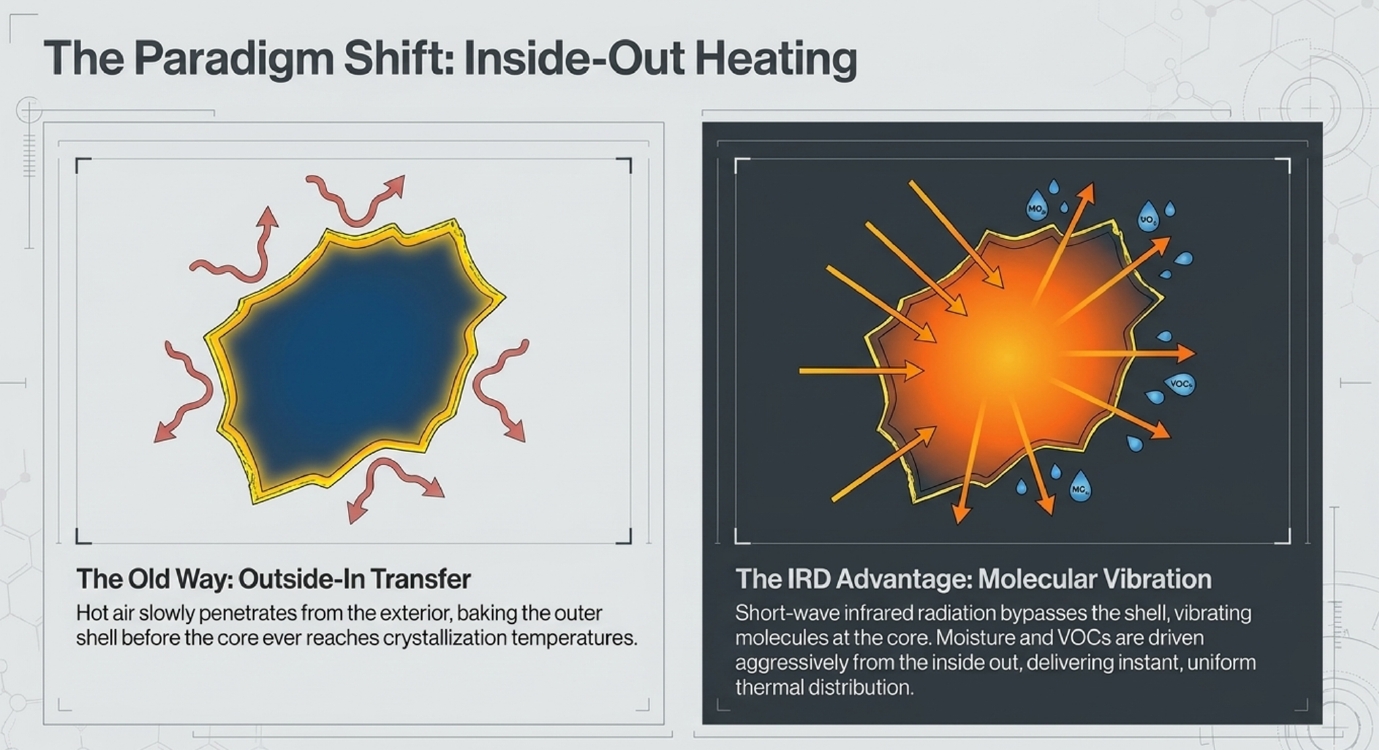
Flying Tiger’s IRD technology utilizes short-wave infrared radiation to vibrate molecules at the core of each flake, heating from the inside out.
- Instant Start-up: Unlike conventional desiccant dehumidifying dryers that require hours of pre-heating, IRD systems reach operational temperatures immediately.
- Eliminating Hydrolysis: By completing crystallization and drying in under 15 minutes, the material spends 95% less time under thermal stress compared to conventional systems
1. Achieving the 5% IV Advantage for High-Tenacity Applications
Maintaining Intrinsic Viscosity (IV)is the benchmark for high-quality recycling. A drop in IV results in brittle material, making it unsuitable for bottle-to-bottle or high-tenacity fiber production.
Laboratory Verified Performance: Independent testing confirms that rPET processed through Flying Tiger’s IRD doesn't just maintain IV stability — it can increase IV by approximately 5%. The uniform heat distribution and rapid moisture removal promote superior molecular alignment, ensuring your recycled resin meets the mechanical standards of virgin PET.
2. Advanced Purification: Achieving Food-Grade Decontamination
To meet FDA and EFSA safety standards, rPET must be stripped of Volatile Organic Compounds (VOCs) and chemical residues.
- Molecular Cleansing:: The intense energy of infrared radiation acts as a purification tool. As the rotary drum tumbles the flakes, contaminants are "pushed" to the surface and evacuated more efficiently than in stagnant hot-air systems.
- Consistent Results: : This continuous agitation ensures every single flake receives identical energy exposure, preventing the "cold spots" that often lead to batches failing safety inspections.
3. Energy Efficient PET Recycling: A 60% Reduction in Operational Costs
Sustainability in the circular economy must be backed by a strong ROI. Flying Tiger IRD systems redefine the cost structure of rPET processing by eliminating energy-intensive desiccant beds.
| Performance Metric | Conventional Desiccant System | Flying Tiger KJ Infrared (IRD) |
|---|---|---|
| Processing Time | 4 ~ 6 Hours | 8 ~ 15 Minutes |
| Energy Consumption | 100% (Baseline) | ~40% (60% Savings) |
| Maintenance | Frequent desiccant replacement | Low-maintenance IR Lamps |
| Material Changes | Hours of downtime | Minutes (Self-cleaning drum) |
4. Engineered for 24/7 Heavy-Duty Industrial Demands
At Flying Tiger, we build long-term industrial assets, not just machines. Our IRD systems are constructed with high-grade stainless steel and precision drive systems designed for continuous 24/7 operation. We provide fully bespoke engineering to match your specific production line:
The Flying Tiger Advantage
- Customized Drum Dimensions: Tailored to your throughput requirements and factory footprint.
- Multi-Stage Infrared Zoning:Precision temperature profiles for varying material densities and contamination levels.
- Full Automation Integration: Software interfaces that plug directly into your existing factory management systems.
Redefine Your rPET Quality Standards
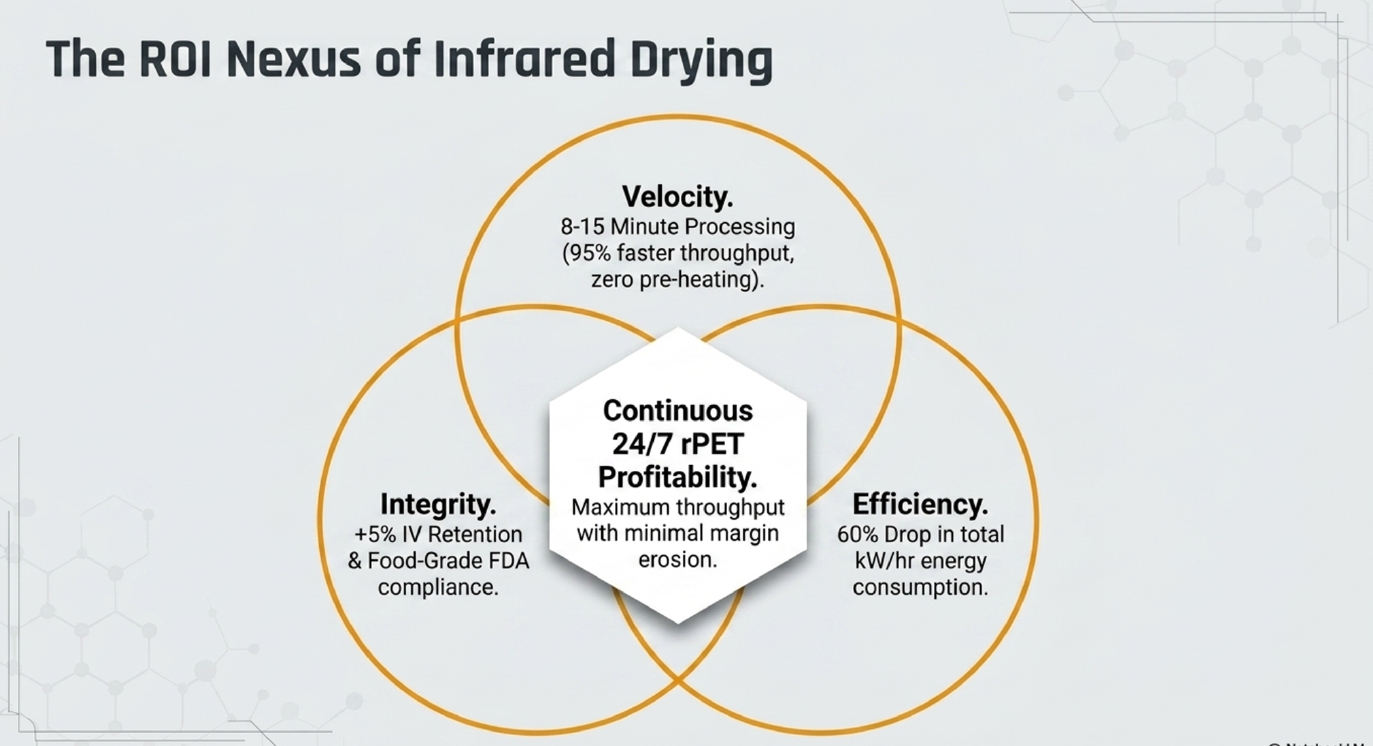
The future of plastic regeneration belongs to those who process faster, cleaner, and more efficiently. Partner with Flying Tiger to gain a competitive edge in rPET purity and production ROI.
➜ [ Explore the Flying Tiger IRD Series – Request a Technical Consultation ]


Back