Industrial Dryers for Plastic: 4 Types and How to Choose the Right One
- 2026.10.16
- TONY WEN / FLYING TIGER KJ CO., LTD.
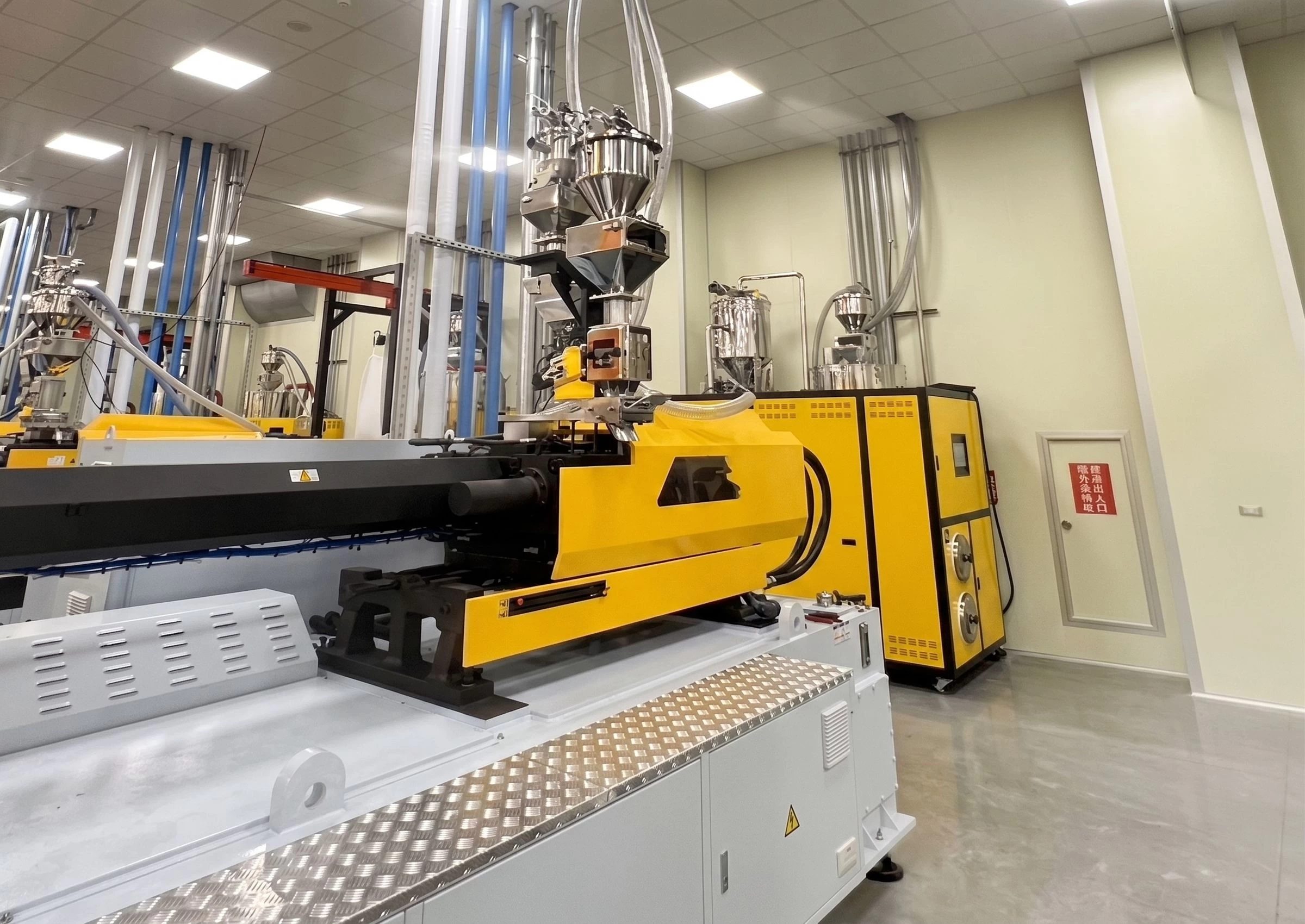
In plastics processing, moisture in the resin can lead to visible defects, loss of strength, and unplanned production stoppages. That's why choosing the right industrial dryers is key for processes such as injection molding, extrusion, and preform manufacturing.
In this guide, we'll look at what role industrial dryers play, what types exist, and how to select the right equipment for each plant's needs.
What Are Industrial Dryers and Why Are They Important for Plastics?
Industrial dryers prepare the resin before plastic injection molding or extrusion. This step is key for materials such as PET, ABS, and PC, since moisture can affect their processing and final quality.
When the resin isn't dried properly, the final product can present problems such as:
- Bubbles: appear due to moisture trapped inside the material.
- Silver streaks or splay marks: affect the surface appearance.
- Loss of mechanical strength: reduces the durability of the finished part.
That's why a suitable drying system helps maintain more stable production and reduce waste at the plant.
Related reading: Plastic Injection Molding and Injection-Blow Molding: Process and Applications
Types of Industrial Dryers for Plastic
Not all industrial dryers work for the same type of resin. The choice depends on the allowed moisture level, drying time, and the plant's production pace.
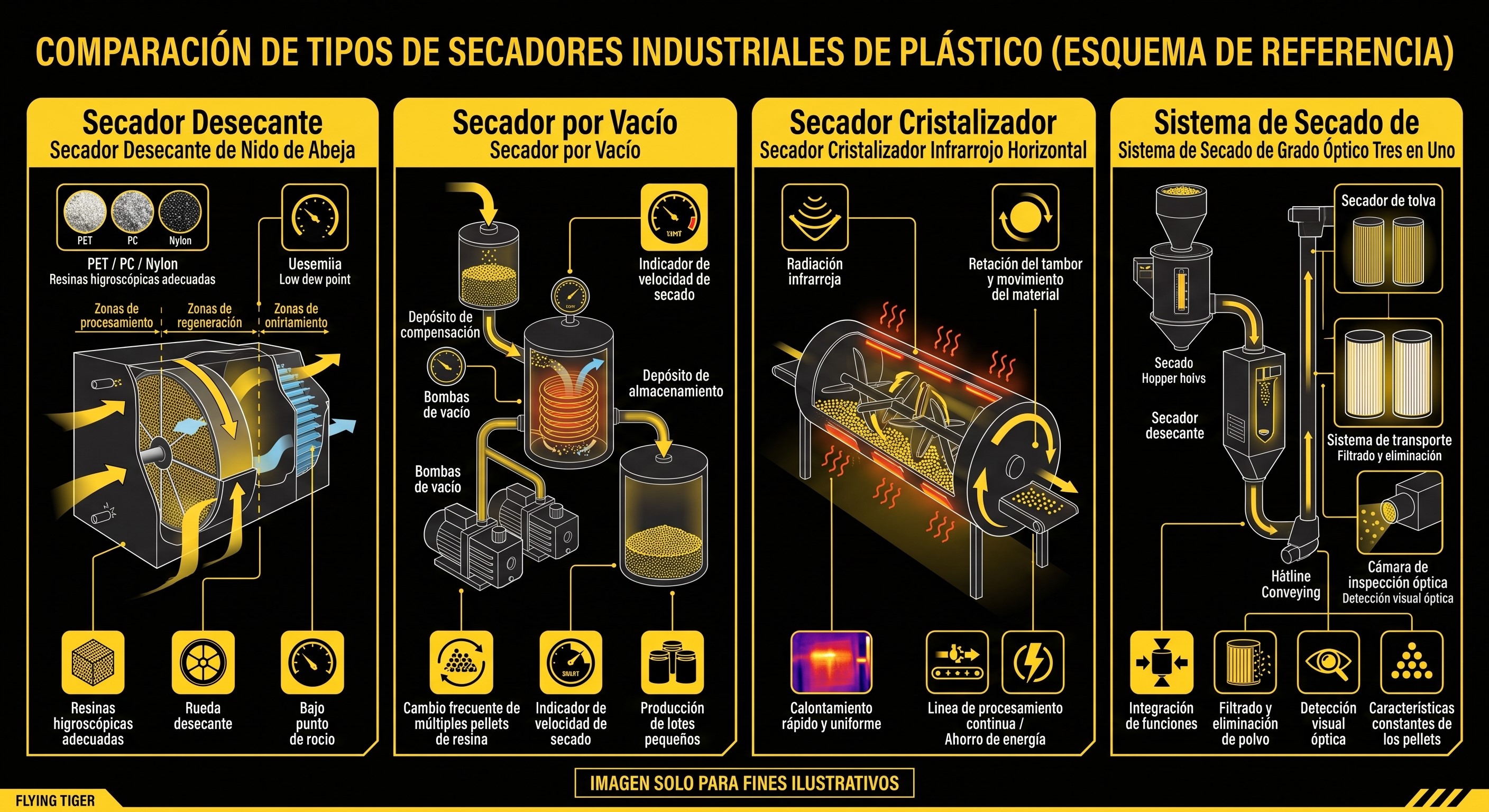
Desiccant Dryer
Removes moisture from the air using desiccant material and maintains a low dew point. It's widely used for hygroscopic resins such as PET, PC, and nylon.
Vacuum Dryer
Works with low pressure to extract moisture from the resin in less time. It's useful for plants that handle frequent material changes or small batches.
Infrared Rotary Dryer
Uses infrared radiation and constant material movement to achieve fast, even heating. It's a good option for continuous lines looking to save energy.
Optical Dryer
Allows the material to be checked through visual detection, such as color, transparency, or surface characteristics. It's integrated into processes where batch consistency is important.
| Dryer Type | Key Point | Common Use |
|---|---|---|
| Desiccant | Low dew point | PET, PC, nylon |
| Vacuum | Shorter drying time | Small batches |
| Infrared Rotary | Even heating | Continuous lines |
| Optical | Visual detection | Batch control |
Related reading: Types of Heat Exchangers: A Thermal Optimization Guide
How to Choose the Right Industrial Dryer for Your Plant?
To choose the right equipment, it's worth reviewing the actual production conditions, not just the price or the dryer's size.
- Capacity and throughput: the dryer must cover the volume of material the plant processes per hour.
- Dew point and drying time: a low dew point helps control moisture. Drying time should also match the production pace.
- Energy efficiency: frequency converters allow consumption to be adjusted according to actual demand.
- Resin compatibility: PET, ABS, PC, and nylon may require different temperatures, times, and drying levels.
- Common mistakes: choosing equipment with low capacity or poor moisture control can cause defects, material waste, and unplanned stoppages.
Industrial Drying Solutions: The Flying Tiger KJ Advantage
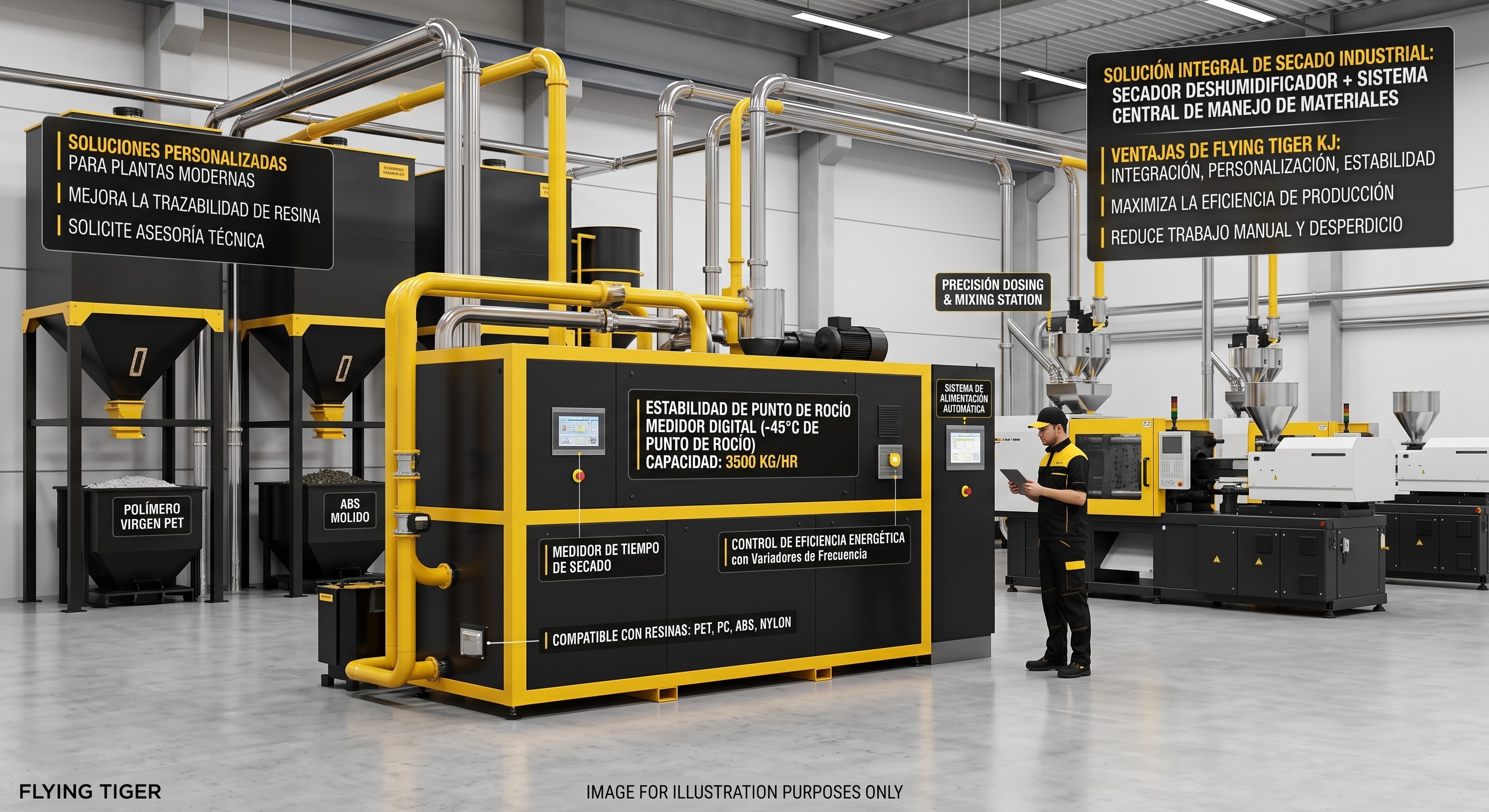
In plastics plants, integrating dryers, hoppers, conveying, dosing, and blending helps stabilize material feeding, reduce manual labor, and improve resin traceability.
Flying Tiger KJ offers a wide range of products, customized solutions, and integration capability for different plant needs.
If you're looking to improve drying stability and optimize raw material handling, contact us today to find the most suitable solution for your production line.
Frequently Asked Questions (FAQ)
Related reading:
Air-Cooled vs. Water-Cooled Chillers: Differences, Advantages, and Disadvantages
What Is Thermal Efficiency? A Guide to Optimizing Plastics Processing


Back