Mastering the Insert Molding Process: A Comprehensive Guide
- 2026.08.28
- TONY WEN / FLYING TIGER KJ CO., LTD.
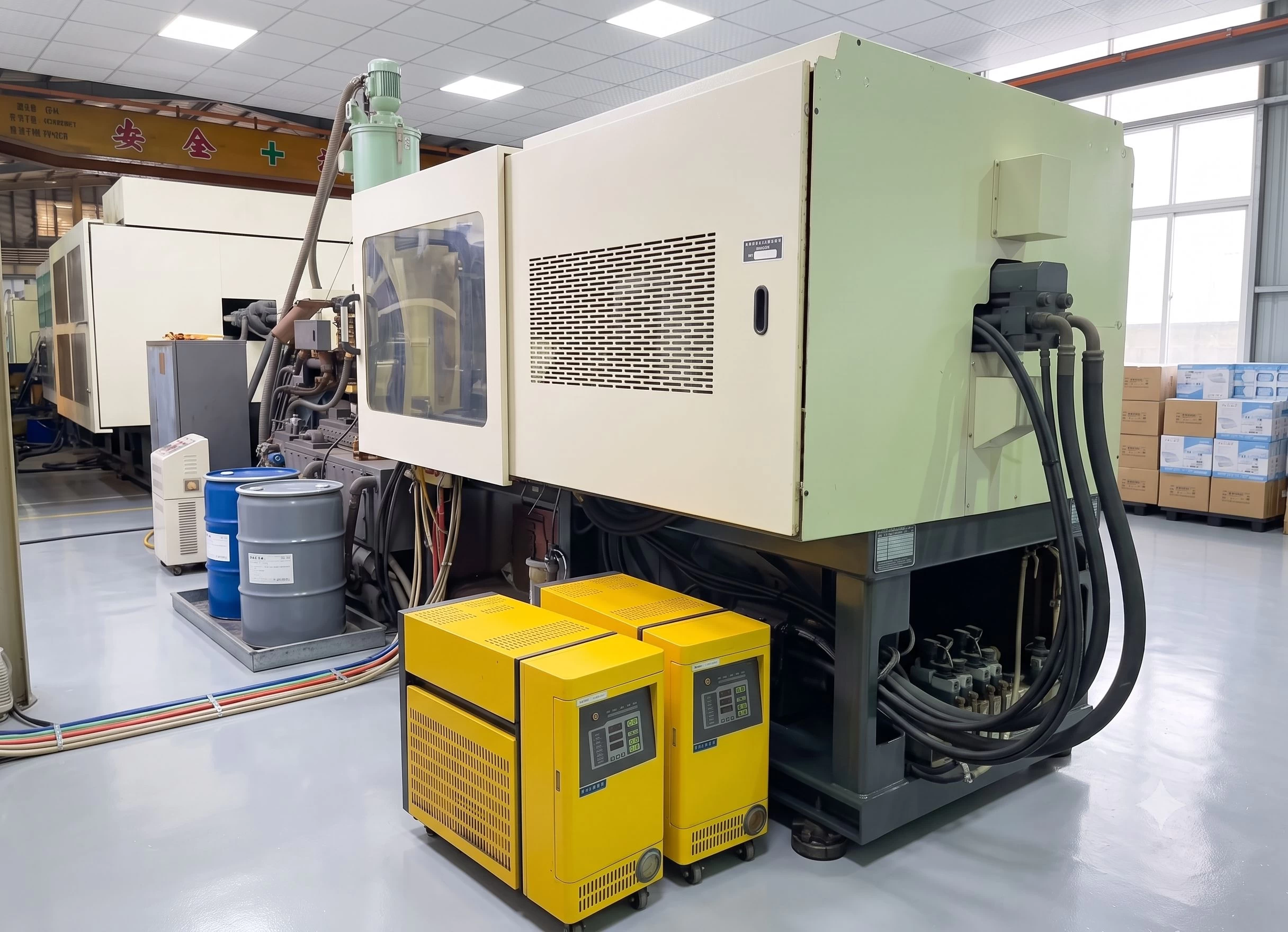
Manufacturers are under constant pressure to build lighter, stronger, and more reliable parts without adding extra assembly steps. That is where the insert molding process comes in.
By molding plastic around a pre-placed metal or non-metal insert, this process creates a single integrated component with better strength, stability, and production efficiency. For the injection molding industry, insert molding has become a practical way to simplify assembly and improve part performance.
1. The Evolution of the Insert Molding Process
The insert molding process gives manufacturers a practical way to build stronger, more functional parts without adding extra assembly steps. A prefabricated metal or non-metal insert is placed into the mold, and molten plastic is injected around it to form one integrated component.
Insert molding is often compared with overmolding, but the two processes serve different purposes:
- Insert molding: bond plastic around a separate insert, such as a metal terminal, threaded insert, pin, or connector.
- Overmolding: add another material over an existing part or substrate, often to improve grip, sealing, comfort, or appearance.
| Feature | Insert Molding | Overmolding |
|---|---|---|
| Primary Purpose | Adds built-in structural support or functional components. | Improves grip, sealing, comfort, or appearance. |
| Base Component | Separate prefabricated insert (e.g., metal terminal, threaded insert, pin). | Existing molded plastic part or substrate. |
| Process Mechanism | Bonds molten plastic around a pre-placed, usually non-plastic, insert. | Adds a second layer of material over a previously molded part. |
Further Reading: Sink Marks in Injection Molding: Causes, Fixes, and Prevention
2. Critical Stages in the Insert Molding Workflow
An insert molding process starts before the resin enters the mold. The insert needs to be clean, accurately placed, and held firmly in position. If it shifts during injection, the finished part may have weak bonding, poor dimensional accuracy, or reduced structural strength.
- Precision in Insert Preparation & Placement: Inserts need to be clean, inspected, and accurately positioned before molding. Stable placement helps prevent shifting, weak bonding, and part misalignment.
- Managing Melt Flow & Encapsulation: Resin should flow evenly around the insert to avoid air traps, weak spots, or incomplete coverage. This step has a direct impact on part strength and long-term reliability.
- Cooling & Ejection: Controlled cooling helps limit stress, warpage, and shrinkage around the insert. During ejection, the part needs to release cleanly without damaging the molded component or loosening the insert.
Further Reading: Mould Temperature Controller: Operation, Types, and Maintenance
3. The Hidden Key to Defect-Free Insert Molding
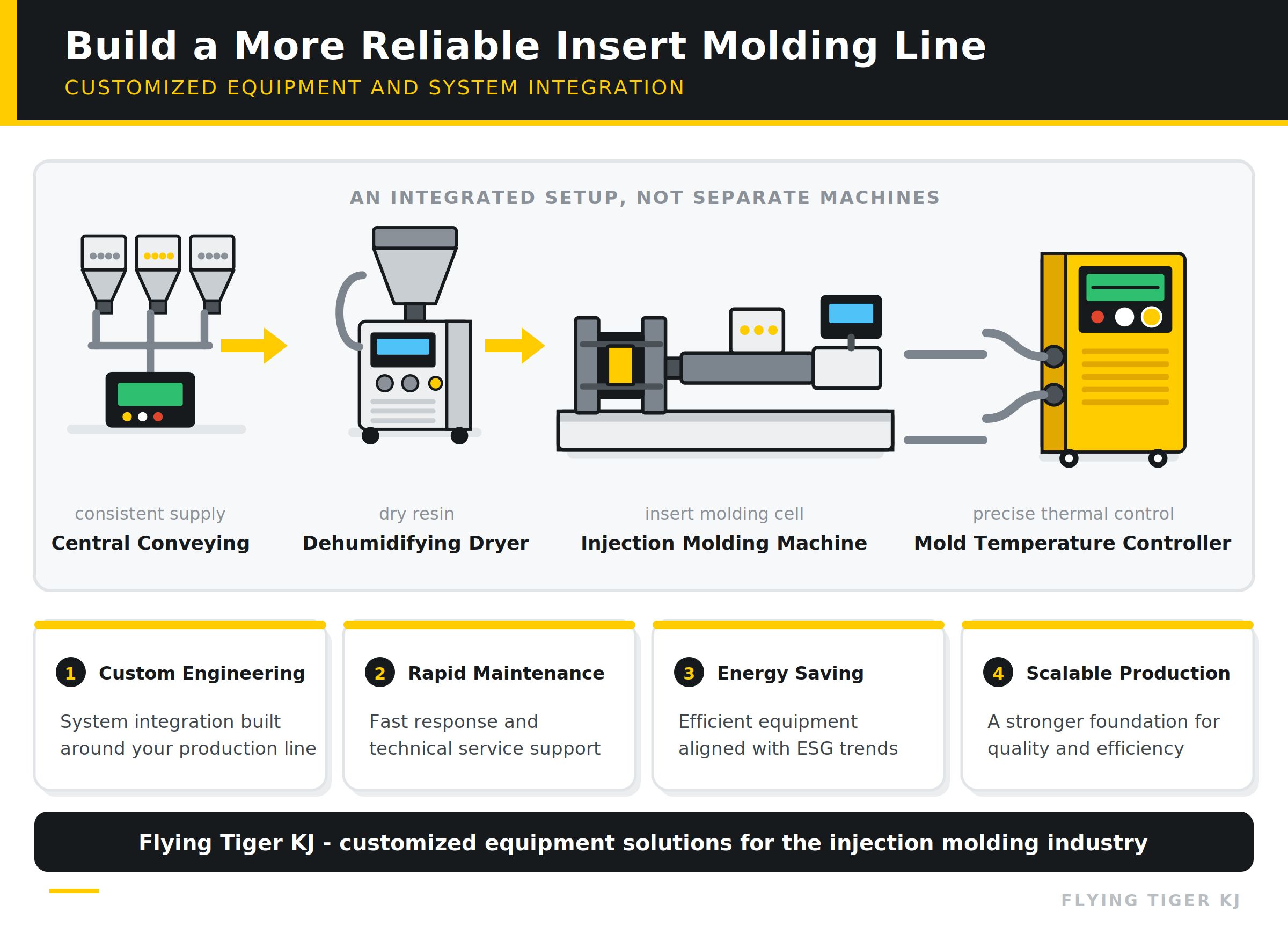
Defect-free insert molding takes more than a well-built mold and the right resin. The equipment around the molding machine also affects temperature control, material dryness, and production stability.
Eliminating Thermal Stress with Precise Mold Temperature Controllers
Stable mold temperature controller helps control resin flow, cooling speed, and shrinkage around the insert. This reduces thermal stress and lowers the risk of warpage, cracking, or weak bonding.
Securing Resin Bonding via Ultra-Efficient Dehumidification
Moisture in the resin can lead to bubbles, weak adhesion, surface defects, and inconsistent strength. Efficient dehumidification keeps the material dry before molding, which is essential for engineering plastics in the injection molding industry.
Streamlining Production with Central Conveying Equipment
Central conveying equipment keeps material supply consistent across the production line. It reduces manual handling, improves cleanliness, and helps maintain stable molding conditions.
Further Reading: Warpage in Plastic Injection Molding: Causes & Proven Solutions
4. Common Applications Across Insert Molding Industries
The insert molding process is widely used when plastic parts need added strength, electrical function, or built-in fastening features. Common applications include:
- Automotive components: connectors, sensor housings, threaded inserts, terminals, and structural parts that need strength, heat resistance, and long-term reliability.
- Medical equipment: device housings, surgical tool components, fluid-handling parts, and precision assemblies that require stable dimensions and clean production.
- High-end consumer electronics: charging ports, connector housings, switches, wearable device parts, and compact components that need durability, accuracy, and reliable electrical performance.
5. Elevate Your Production Line with Flying Tiger KJ’s Solutions
High-quality molds and resins matter, but they are only part of the equation. A stable insert molding process also depends on the equipment that controls mold temperature, keeps materials dry, and delivers resin consistently to the production line. Flying Tiger KJ helps manufacturers build a more reliable molding setup through customized engineering and system integration.
With rapid maintenance support, technical service, and energy-saving equipment aligned with ESG trends, Flying Tiger KJ gives manufacturers a stronger foundation for quality, efficiency, and scalable production in the injection molding industry.
Contact Flying Tiger KJ today to explore our customized equipment solutions and optimize your manufacturing process!
6. FAQs
Further Reading:
- The Ultimate Guide to Desiccant Air Dryers and Dew Point Control
- How to Choose the Right Plastic Resin Dryer for Injection Molding and Maximize ROI in 2026


Back