Mould Temperature Controller: Operation, Types, and Maintenance
- 2026.08.14
- TONY WEN / FLYING TIGER KJ CO., LTD.
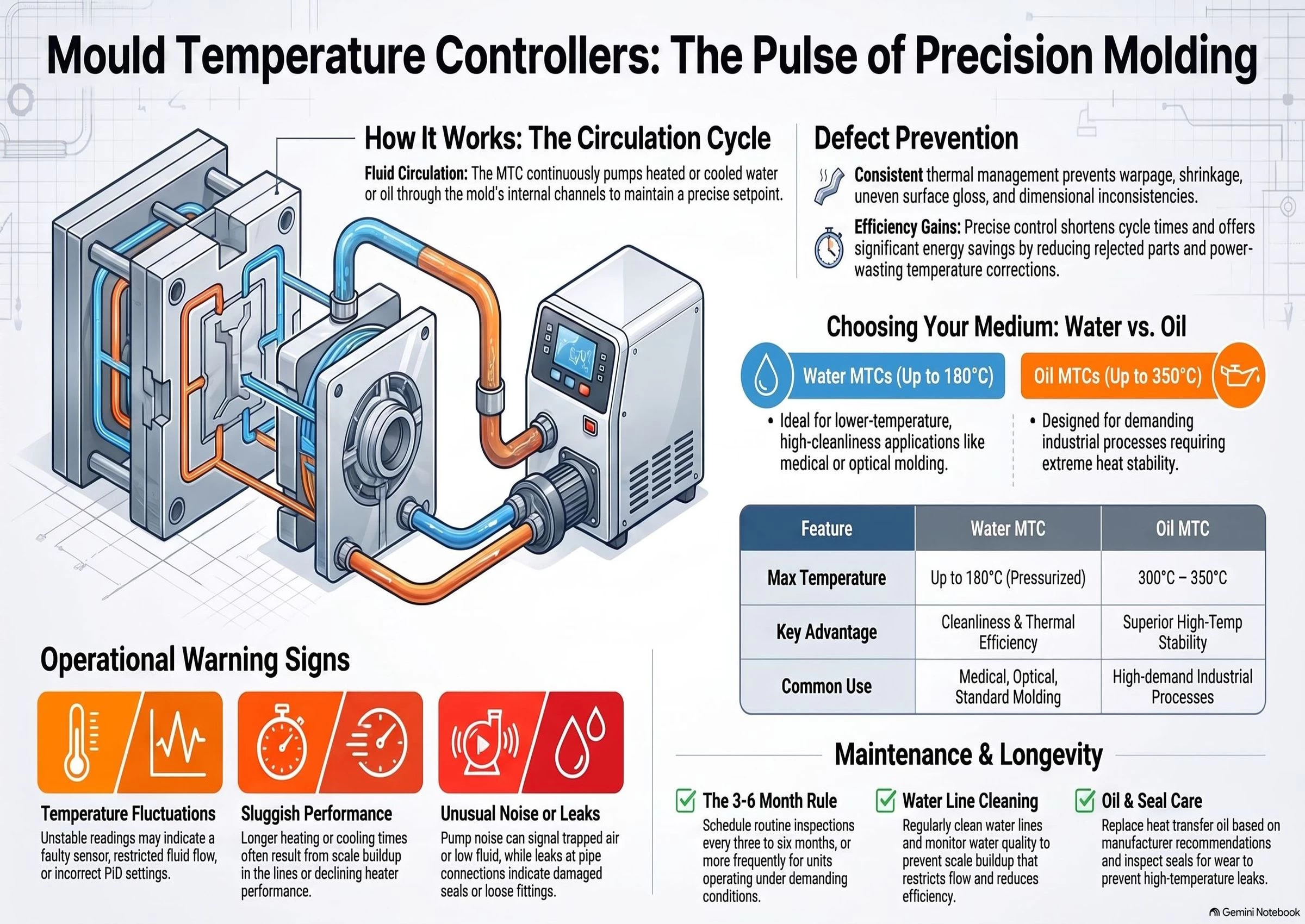
Stable mold temperature helps prevent warpage, shrinkage, uneven gloss, and dimensional inconsistencies. A mold temperature controller circulates water or heat transfer oil through the mold to maintain consistent temperatures.
This guide covers how MTCs work, water and oil models, warning signs, maintenance, and the differences between MTCs and chillers.
1. What Is a Mold/Mould Temperature Controller and Why It Matters in Molding
A mold temperature controller circulates heated or cooled water or oil through the mold to maintain a stable operating temperature. By managing heat throughout the molding cycle, it helps the material fill, cool, and solidify more consistently.
Temperature instability can cause shrinkage, warpage, dimensional variation, and an uneven surface gloss. Precise temperature control addresses these issues by improving yield rates, shortening cycle times, and offering significant energy savings from reduced rejected parts and fewer power-wasting temperature corrections.
Further Reading: Warpage in Plastic Injection Molding: Causes & Proven Solutions
2. Types of Mold Temperature Controllers: Water vs. Oil
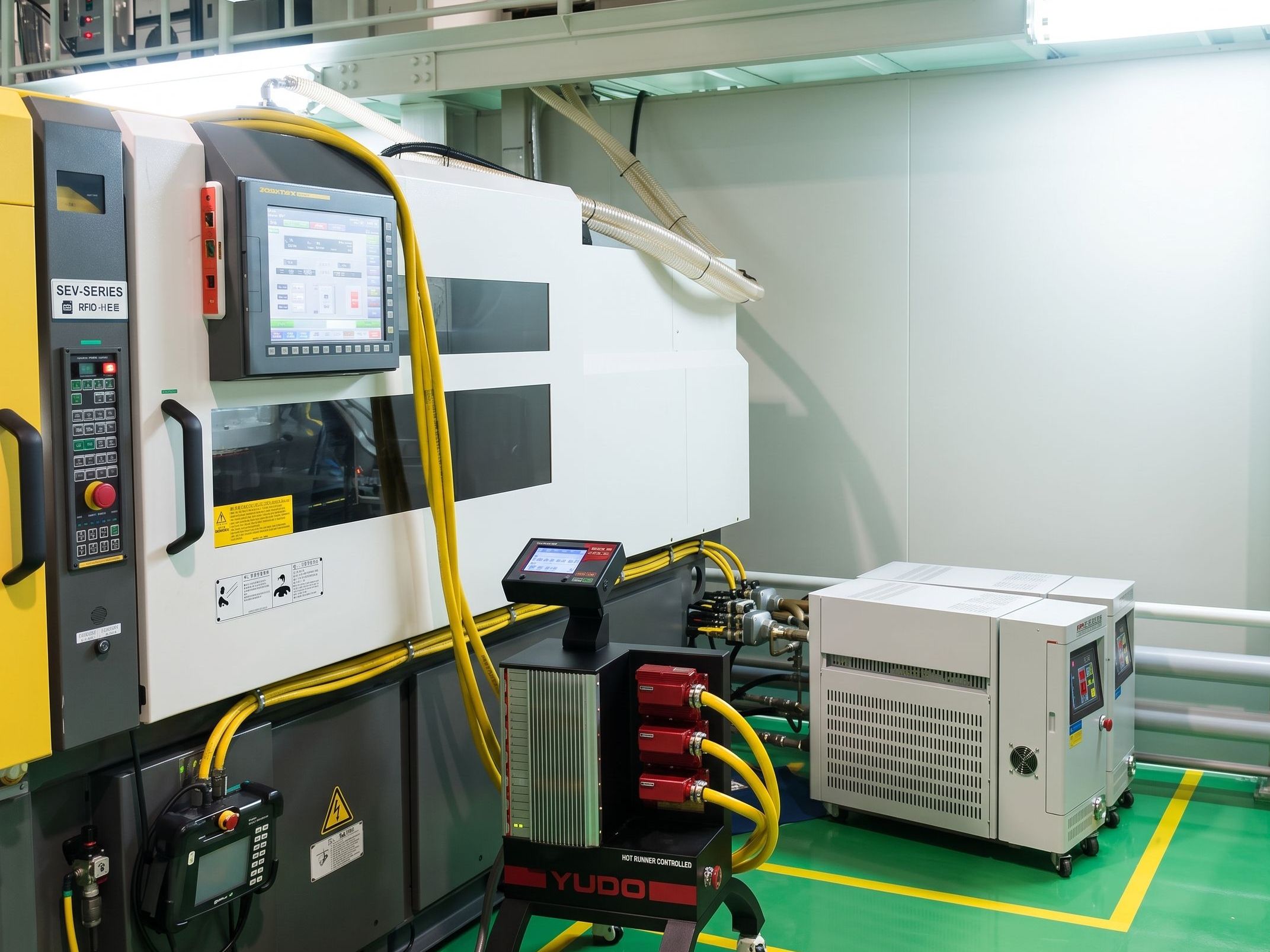
The two main types of mold temperature controllers are water-based and oil-based. Each uses a different heat transfer medium to meet specific temperature and process requirements.
Water Mold Temperature Controllers
Water provides efficient heat transfer, making a water temperature controller ideal for lower-temperature applications.
For specialized requirements, such as medical or optical product manufacturing, high-temperature water MTCs offer an ideal solution by providing precision. Since it does not require heat transfer oil, it also offers a cleaner option for many molding processes.
Oil Mold Temperature Controllers
Heat transfer oil can operate at higher temperatures while maintaining stable performance, making an oil temperature controller well suited for demanding industrial processes that require consistent high-temperature control.
| Comparison | Water Mold Temperature Controller | Oil Mold Temperature Controller |
|---|---|---|
| Heat Transfer Medium | Water | Oil |
| Temperature Range | Low to medium (typically up to 180°C) | High (up to 300°C–350°C) |
| Key Advantage | High thermal efficiency and cleanliness | Superior high-temperature stability |
| Primary Application | Standard, medical, or optical molding | High-demand industrial processes requiring consistent high heat |
3. How a Mold Temperature Controller Works & Warning Signs to Watch For
A mold temperature controller circulates water or heat transfer oil through the mold, using a heater and cooling system to regulate fluid temperature.
Advanced models almost feature smart safe operation monitoring to help prevent unexpected downtime. To ensure your system continues to run at peak efficiency and identify potential maintenance needs early, keep a close eye on these common operational indicators:
- Increased Temperature Fluctuations: May indicate a faulty sensor, restricted fluid flow, or incorrect PID settings.
- Longer Heating or Cooling Times: Can result from scale buildup, insufficient fluid flow, or declining heater performance.
- Noise From the Pump or Unit: Unusual sounds may point to trapped air, worn pump components, or low fluid levels.
- Fluid Leaks at Pipe Connections: Loose fittings or damaged seals can reduce fluid flow and affect temperature stability.
4. Mold Temperature Controller vs. Chiller: What’s the Difference?
Both systems manage process temperature, but they serve different purposes. A mold temperature controller maintains a precise mold setpoint, while a chiller supplies chilled water to remove excess process heat.
| Comparison | Mold Temperature Controller | Cooling Chiller |
|---|---|---|
| Functional Positioning | Heats or cools the mold and maintains the set temperature | Supplies chilled water to remove process heat |
| Temperature Control Precision | Provides precise temperature control at the mold | Maintains the cooling-water temperature but does not directly control mold temperature |
| Application Stage | Mold preheating and temperature control during molding | Heat removal from molds, machines, or centralized cooling systems |
5. Maintenance Tips to Keep Your Equipment Running Efficiently
To maintain optimal performance, it is recommended scheduling routine inspections for your mold temperature controller every three to six months. For units operating under demanding conditions, more frequent inspections are advisable.
- Water MTCs: Clean the water lines and check water quality regularly to prevent scale buildup and restricted flow.
- Oil MTCs: Replace the heat transfer oil based on its condition and the manufacturer’s recommendations. Inspect the seals for wear to prevent high-temperature leaks.
Regular maintenance extends equipment life and helps maintain consistent temperature control.
6. Choosing a Reliable Mold Temperature Controller Partner: Flying Tiger KJ
A mold temperature controller should deliver stable temperature control without increasing energy use or maintenance demands. The supplier should also be able to configure the system around your process and support it throughout its service life.
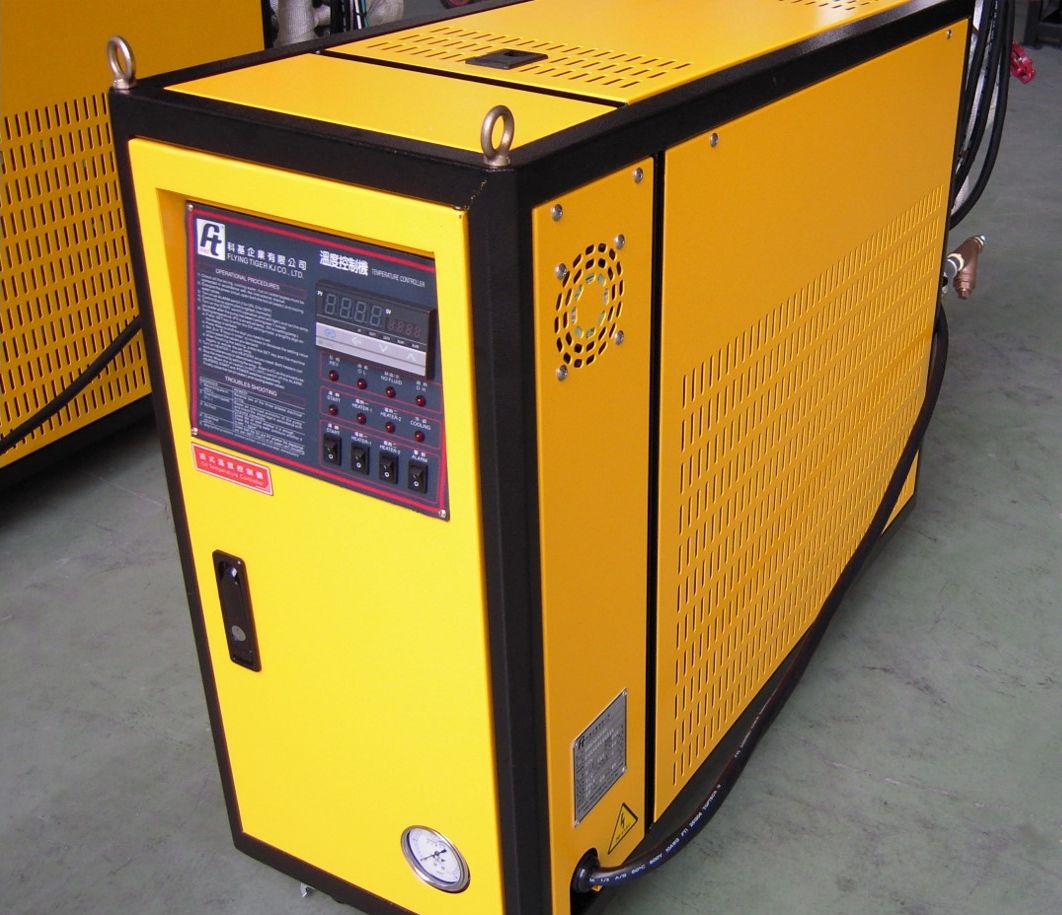
Flying Tiger KJ’s temperature controlling series covers water-type, oil-type, dual-temperature, and heating/cooling cycling models. We stand out with our extensive customization capabilities and integrated system-level services, tailoring solutions to fit your specific plant environment.
Furthermore, our equipment is designed for ease of maintenance—allowing for single-part replacements without the need to swap out entire modules, saving you both time and money.
With readily available spare parts and highly responsive support, we ensure reliable operation across different molding processes. Contact us today to find the right temperature control solution for your process and improve production efficiency.
Further Reading: Mastering the Insert Molding Process: A Comprehensive Guide
FAQs
Further Reading:
- Sink Marks in Injection Molding: Causes, Fixes, and Prevention
- The Ultimate Guide to Desiccant Air Dryers and Dew Point Control


Back