Plastic Injection Molding and Injection-Blow Molding: Process and Applications
- 2026.10.09
- TONY WEN / FLYING TIGER KJ CO., LTD.
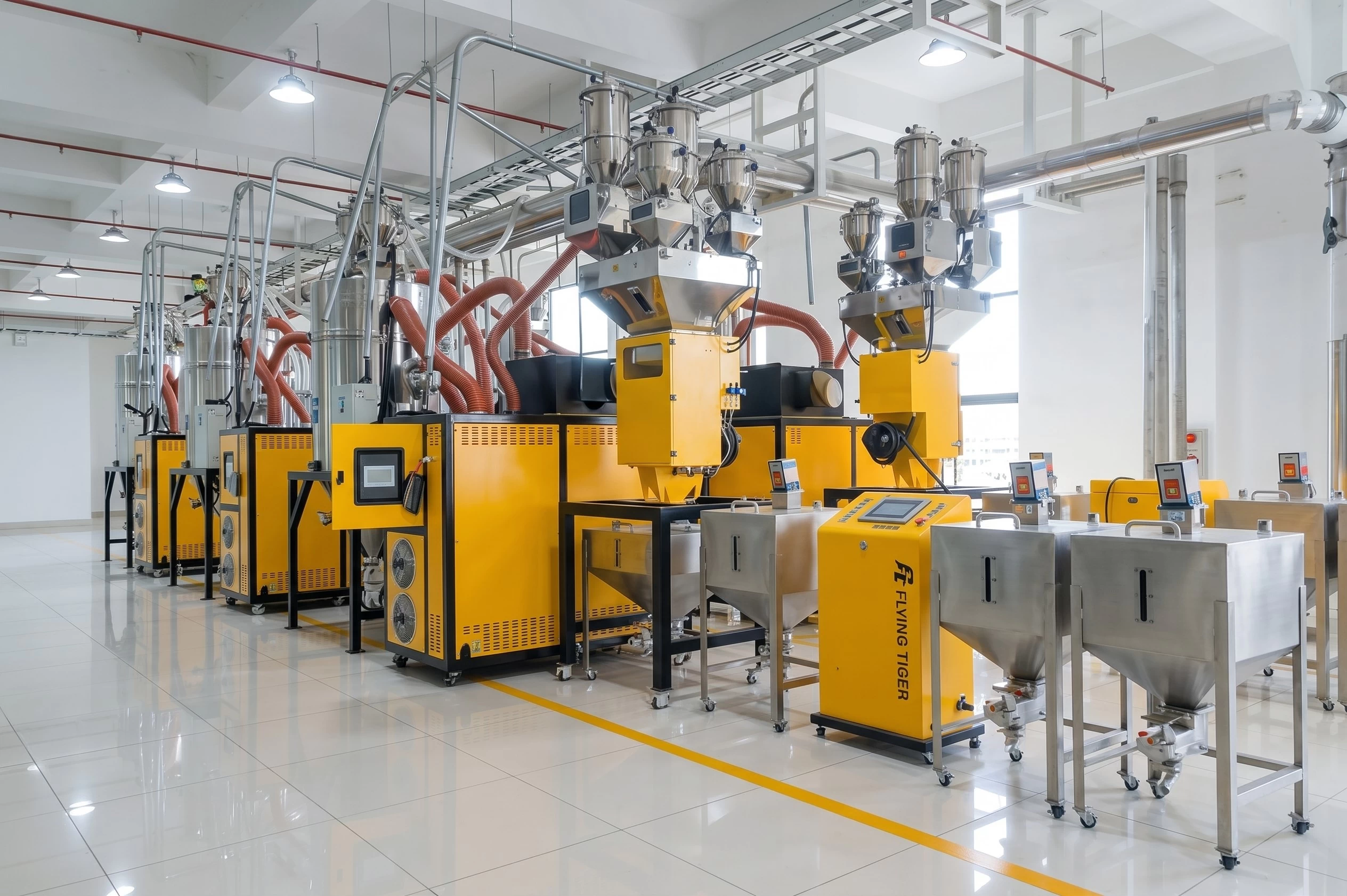
In industrial manufacturing, process stability directly influences part quality, costs, and line efficiency. That's why understanding the plastic injection molding process helps you make better decisions, from material selection to temperature control.
In this guide, we'll look at how plastic injection molding works, what role injection-blow molding plays, and what equipment helps maintain more stable production.
What Is Plastic Injection Molding and How Does It Work?
Plastic injection molding is one of the processes used to manufacture technical parts in large volumes. The material is melted, injected under pressure into a mold, and cooled until it reaches the required shape.
This method allows for the production of precise, repeatable parts for sectors such as automotive, optical products, packaging, and PET preform manufacturing. It also adapts to components with different shapes, sizes, and technical requirements, maintaining efficiency and control in high-demand industrial lines.
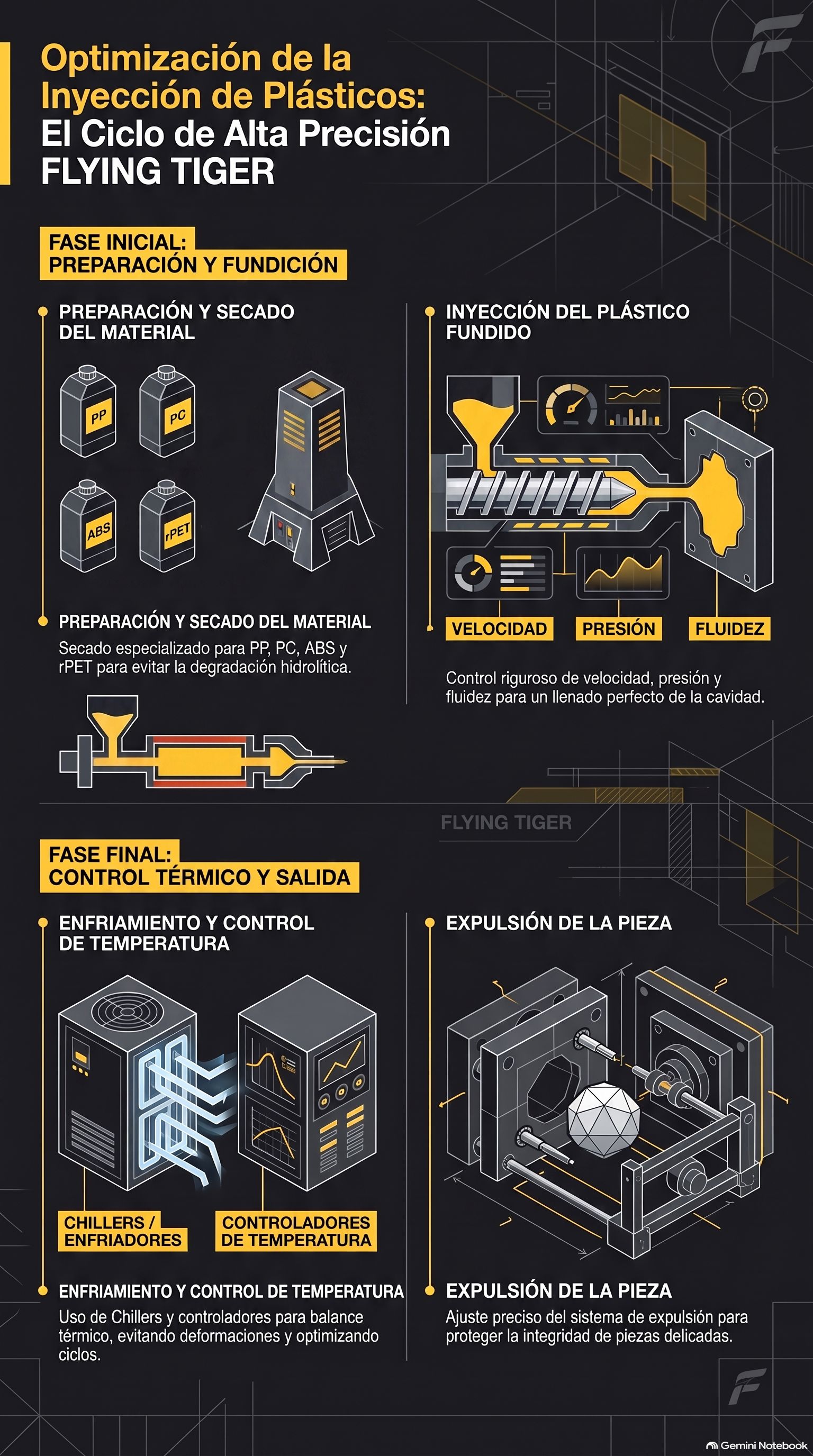
The 4 Key Phases of the Plastic Injection Molding Process
In an injection line, from material drying to final ejection, any variation can affect the finish, strength, or dimensional stability.
Material Preparation and Drying
Before entering the machine, the plastic must be properly prepared and dried. Excess moisture can cause bubbles, surface marks, or loss of strength in the final part.
Polypropylene (PP): An option for manufacturing industrial components and technical parts.
Polycarbonate (PC) and ABS: Widely used in optical products, electronics housings, and semiconductor components for their strength and high surface precision requirements.
PET and Recycled PET (rPET): A key material not only for preform manufacturing but also for driving the circular economy. Processing rPET requires specialized drying systems to prevent hydrolytic degradation.
Injection of the Molten Plastic
The molten material is introduced into the mold under pressure. Injection speed, pressure, and material flowability directly influence cavity filling.
Cooling and Temperature Control
A stable temperature helps reduce deformation, irregular shrinkage, and dimensional variations. Equipment such as chillers and mold temperature controllers help maintain consistent conditions throughout the cycle.
Precise mold temperature control not only prevents deformation but also optimizes cycle time. An efficient cooling system helps maintain the ideal thermal balance, minimizing residual stress in the molded part.
Part Ejection
Once the part reaches the necessary rigidity, it's ejected from the mold. A well-adjusted ejection process prevents damage, marks, or deformation in delicate components.
In practice, this equipment works best when it's part of comprehensive plant planning, with drying, material conveying, thermal control, and production pace well coordinated.
Related reading: Types of Heat Exchangers: A Thermal Optimization Guide
What Is Injection-Blow Molding (IBM) and How Is It Different?
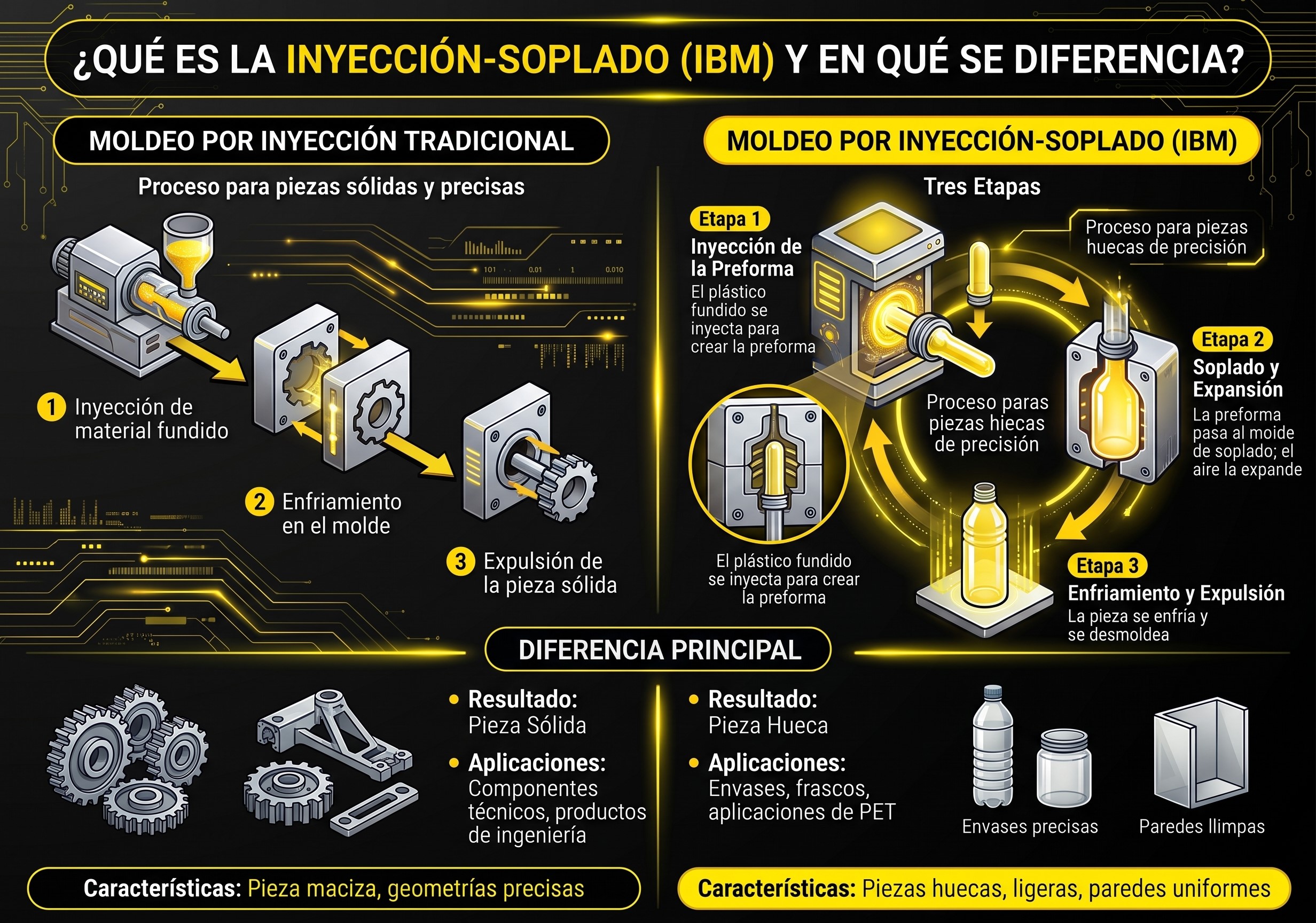
Injection-blow molding, or IBM, is a process used to manufacture hollow parts with good dimensional precision, such as containers, jars, and PET-related applications.
Unlike traditional injection molding, the goal isn't to obtain a solid part directly from the mold, but rather to first form a preform and then give it volume using air.
The cycle takes place in three stages. First, the molten plastic is injected to create the preform. Then, this preform moves to a blow mold, where air expands it until it reaches its final shape. Finally, the part is cooled and released from the mold.
The main difference lies in the type of part produced. Traditional injection molding is used for solid parts, technical components, or products with precise geometries; injection-blow molding is applied when hollow, lightweight parts with uniform walls are needed.
| Feature | Injection Molding | Injection-Blow Molding (IBM) |
|---|---|---|
| Process goal | Manufacture solid, dense parts | Manufacture hollow, lightweight parts |
| Cycle stages | 1 stage (direct injection into mold) | 2 stages (preform + air blow) |
| Common materials | PP, PC, ABS, Nylon | PET, HDPE, PP |
| Application examples | Housings, gears, technical components | Medical vials, bottles, cosmetic packaging |
Elevate the Quality of Your Plastic Injection with Flying Tiger KJ
Whether in injection molding or injection-blow molding, the quality of the final part depends on the stability of the auxiliary equipment.
With decades of experience, Flying Tiger KJ doesn't just supply machinery—it stands out in the market for its high customization capability and the integration of individual units into complete systems, adapting exactly to your plant's conditions.
High-Efficiency Drying and Crystallization
Advanced solutions such as honeycomb dehumidifiers, infrared dryers (ideal for rapid PET crystallization), and vacuum dryers that drastically shorten processing time, promoting energy savings and sustainability (ESG).
Precise Temperature Control (PID)
High-temperature water mold temperature controllers and chillers with Inverter technology, which ensure a perfect thermal balance to reduce defects and shorten production cycles.
Central Systems and Precise Dosing
Integration of central feeding systems (Central Conveying Systems) and gravimetric blenders (Gravimetric Blenders), which automate transport, prevent material loss, and enable precise data control over resin usage.
Flying Tiger KJ equipment is known for its extreme durability—far exceeding the standard 5 to 7-year depreciation period.
Contact us today to discover how our auxiliary equipment can optimize your plastic injection and blow molding line.
Related reading: Industrial Dryers for Plastic:
4 Types and How to Choose the Right One
Frequently Asked Questions (FAQ)
Related reading:
What Is Thermal Efficiency? A Guide to Optimizing Plastics Processing
Air-Cooled vs. Water-Cooled Chillers: Differences, Advantages, and Disadvantages


Back